Protective packaging test guide
Honeycomb Wrapping Paper vs Bubble Wrap: Which Protects Better? 8 Tests
Match wrap width and packout to the product, control movement, and test the complete parcel before scale.
The short answer: when should you use honeycomb wrapping paper?
Use honeycomb wrapping paper as a wrapping layer, not as a universal substitute for every cushioning material. Stretch it so the cells open, protect corners, control movement with suitable void fill, and test the complete packed product. Material choice must follow product fragility, weight, distribution hazards and verified recovery options.
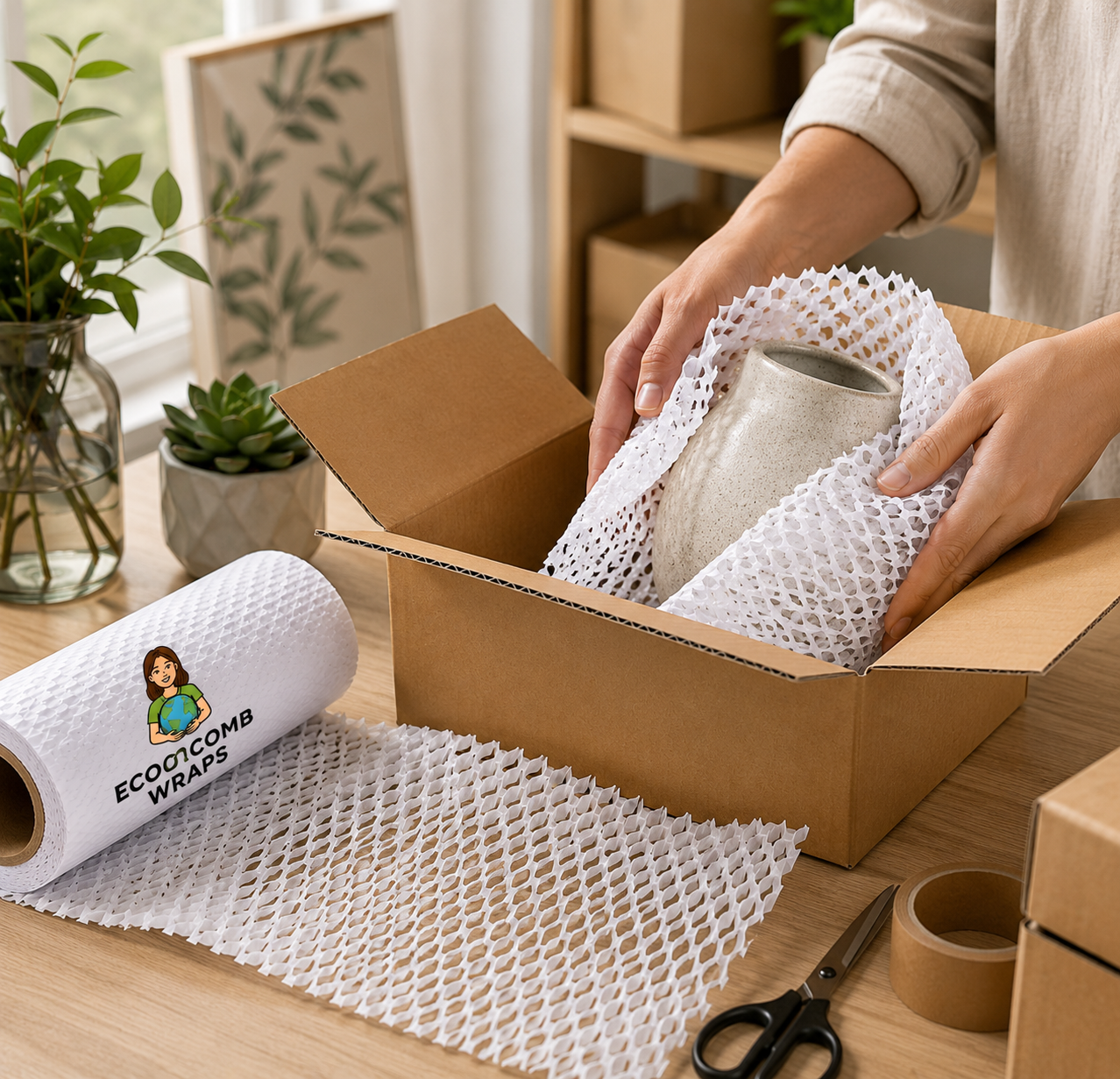
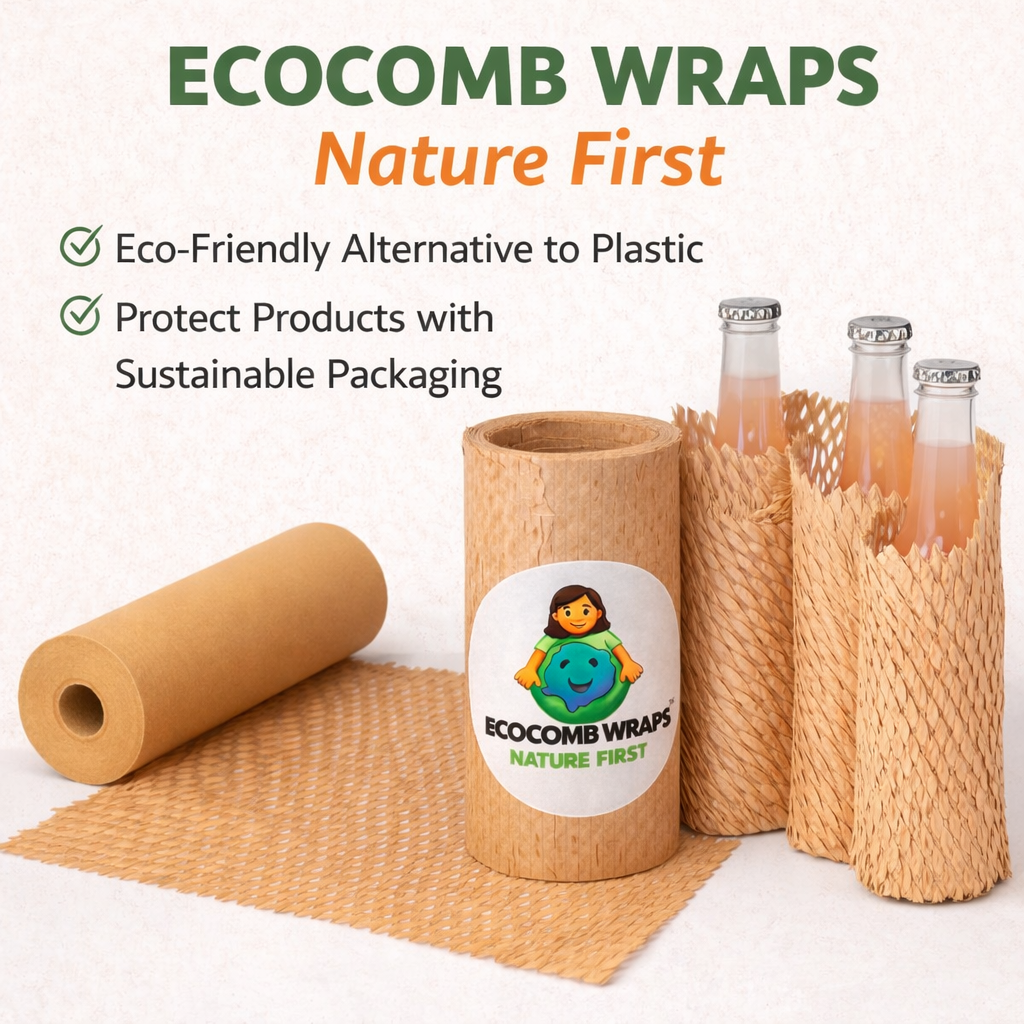
Honeycomb paper wrap expands into interlocking cells when stretched. Those cells help the sheet grip itself and create separation around an item, which can make it useful for bottles, ceramics, homeware, cosmetics and gift sets. But the word “honeycomb” does not tell you how much shock protection a particular pack will provide.
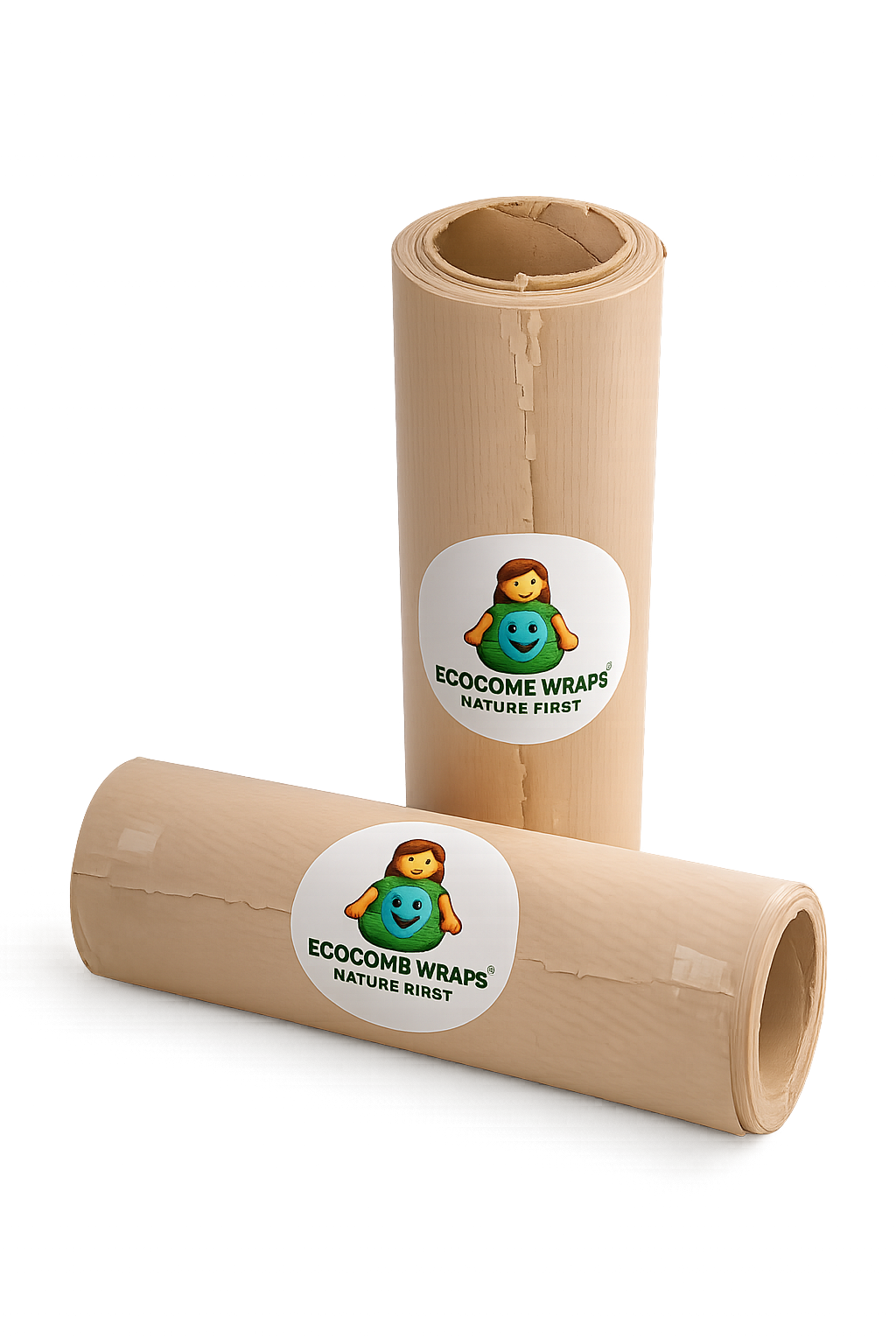
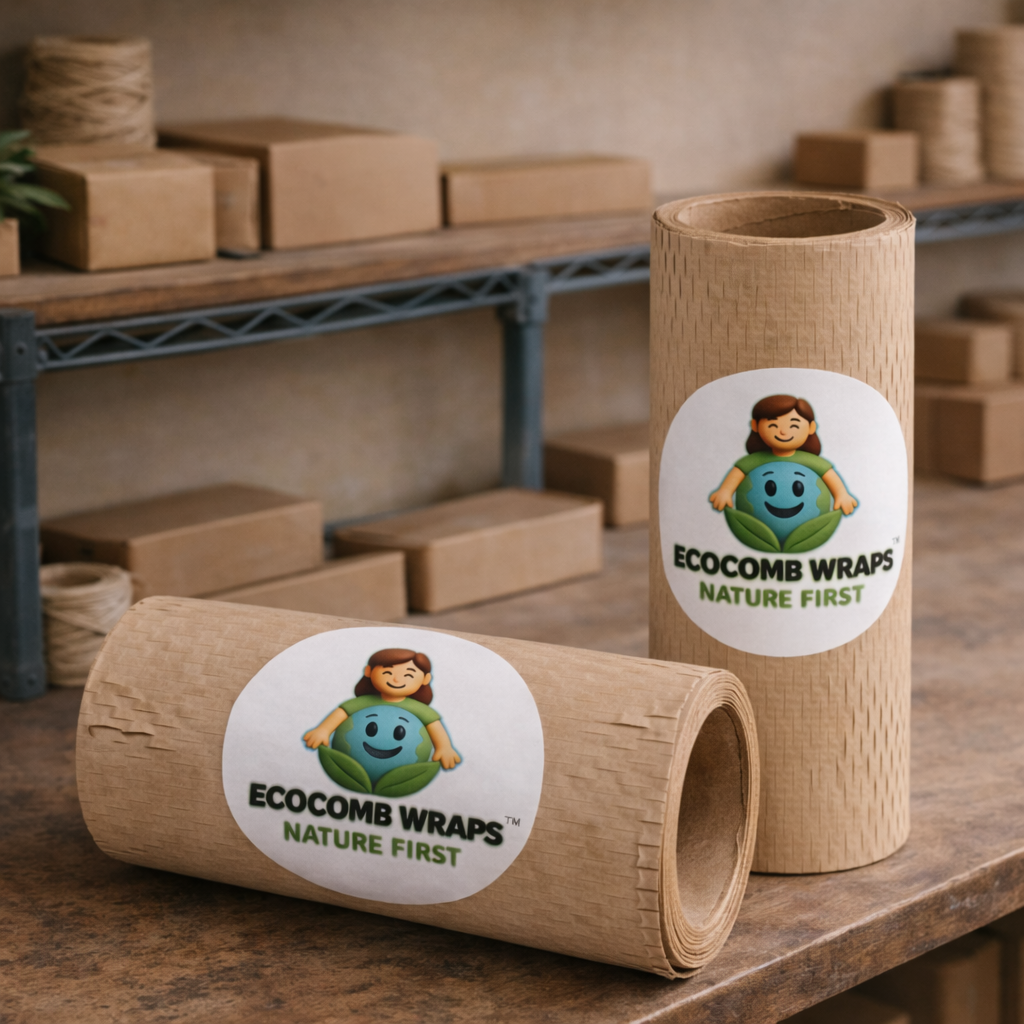
This guide is for ecommerce teams evaluating white honeycomb paper wrap, a 7-inch honeycomb paper roll or a 10-inch brown roll. It combines a Semrush SERP-aligned draft with packaging-test, carrier and environmental guidance. Use it to design a trial, not to replace testing for your exact product and route.
Honeycomb paper vs bubble wrap, kraft paper and inserts
Protective packaging works as a system. A wrap isolates surfaces; cushioning manages shock; void fill limits movement; and the outer box resists handling and compression. One material may perform more than one role, but only a packed-product test can show whether the combination is adequate.
| Option | Typical role | Strengths | Watch-outs |
|---|---|---|---|
| Honeycomb wrapping paper | Surface wrap and separation | Expandable cells, self-gripping layers, paper presentation | Needs correct stretch; may need added corner, shock or void protection |
| Air-cellular bubble wrap | Cushioning and surface protection | Consistent air cells and familiar packout | Film type, reuse and local recovery vary; plastic-reduction goals may differ |
| Crumpled kraft paper | Void fill and light cushioning | Fast to form, useful for immobilizing suitable items | Performance depends on paper, density, technique and product fragility |
| Corrugated insert | Positioning, separation and structural support | Repeatable fit and controlled product location | Requires tooling or design work; poor fit can transfer force to the product |
If the box itself is still undecided, read our mailer box vs shipping box guide. Outer-container strength, empty space and closure matter as much as the visible wrapping layer.
Eight honeycomb wrapping paper mistakes to avoid
1. Treating it as a universal drop-protection replacement
“Paper instead of plastic” is a material choice, not a performance specification. A glass bottle, glazed mug, metal accessory and boxed candle have different masses, weak points and damage modes. Honeycomb wrap can protect surfaces and add separation, but a sharp corner or heavy product may still need a formed insert, corrugated divider, pad or another cushioning solution.
The International Safe Transit Association explains that packaged-product test procedures range from integrity screening to general distribution simulations. ISTA also stresses in its design and testing guidance that test selection should reflect the actual distribution environment. Start with the product-and-package system, not a generic claim about one material.
2. Wrapping without opening the honeycomb cells
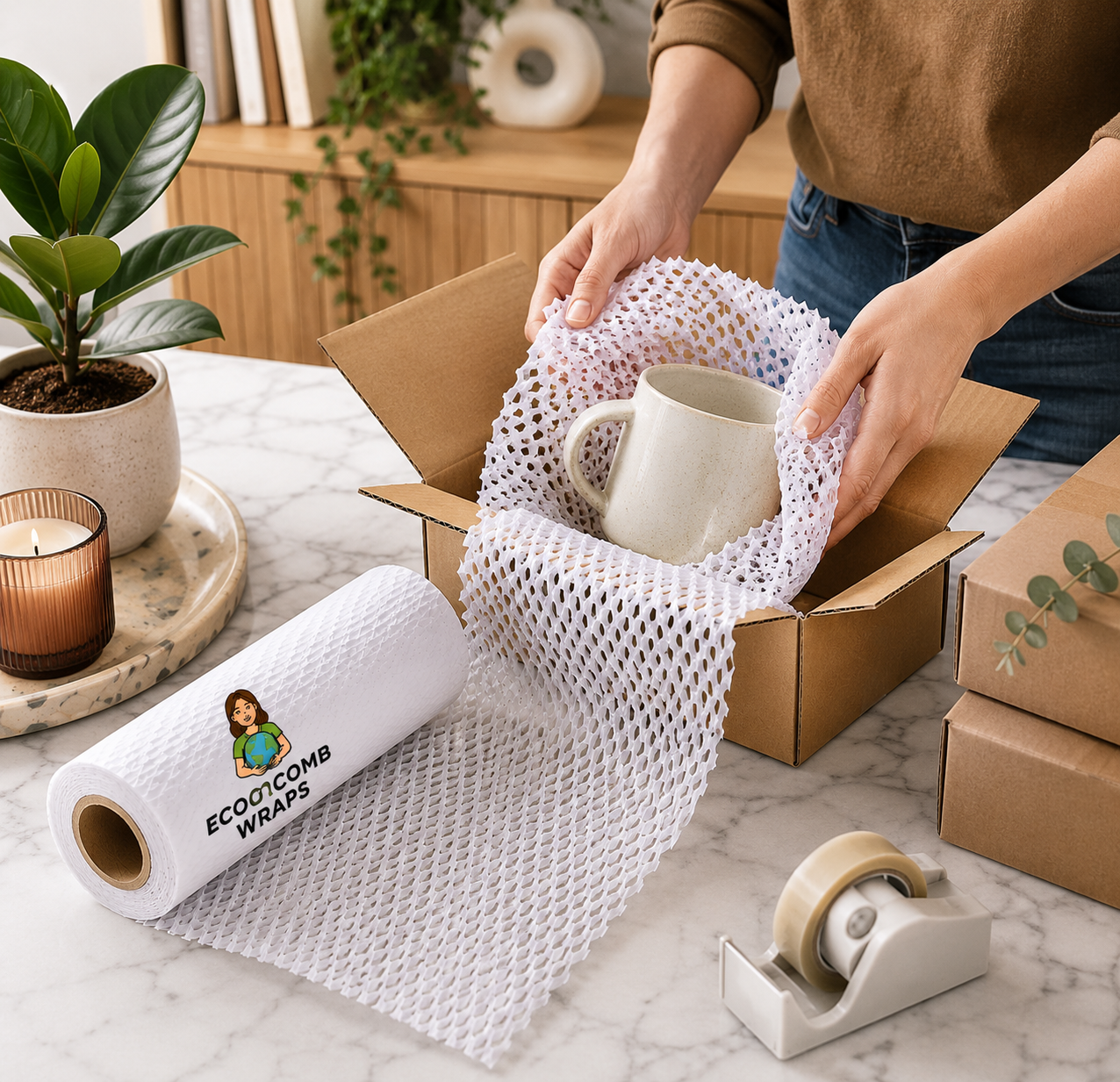
Honeycomb paper must be pulled to expand its cells. If it is laid around the item like flat kraft paper, it cannot create the same three-dimensional network or self-gripping effect. Too little tension wastes material and allows layers to slide; uncontrolled force can over-compress a light product or produce inconsistent packouts.
Train packers to hold the product, pull the web evenly, overlap the wrap and secure the end using the approved method. Document the number of turns or a target finished thickness for each SKU. A repeatable instruction is more valuable than telling people to use “enough paper.”
3. Leaving corners, necks and protrusions exposed
Damage often begins at concentrated contact points. Bottle shoulders, pump heads, mug handles, sharp box corners and ceramic rims may need local reinforcement even when the broad surfaces are wrapped. Inspect the product from every side after wrapping: no fragile edge should be the first point to meet the outer box.
For paired products, prevent item-to-item contact as well as contact with the box wall. A divider or insert may be more reliable than adding many more layers of wrap. If appearance matters, use a cleaner inner presentation layer such as custom tissue paper separately from the material responsible for transit protection.
4. Confusing wrapping with void fill
A beautifully wrapped item can still move inside an oversized carton. Shake is not a laboratory test, but gentle movement during packout can reveal obvious free space. Use right-sized boxes and an appropriate void-fill or insert strategy so the wrapped product cannot gain momentum before impact.
Carrier guidance supports this system view. FedEx’s customer packaging guidelines distinguish wrapping, cushioning and filling void spaces. UPS guidance likewise describes paper cushioning primarily as void fill for suitable light- to medium-weight, non-fragile items in its service and packaging guide. These are general references; carrier rules and services should be checked for the shipment you actually send.
5. Ignoring mass, fragility and the distribution route
Packaging hazards change with product weight, dimensions, temperature, humidity, stacking, handling and the parcel network. A pack that survives a short local courier route may not survive repeated conveyor transfers or long-distance parcel handling. Treat damage history and customer returns as data, then reproduce likely hazards in a controlled trial.
FedEx describes package tests using drop, impact, compression and vibration to evaluate protective performance in its testing guide for packaged products under 150 pounds. You do not need to claim a formal certification for an early pilot, but you do need a documented pass/fail definition: product condition, closure, scuffing, leakage, deformation and acceptable cosmetic change.
For a product family, test the worst credible configuration rather than only the easiest SKU. A taller bottle, heavier jar or mixed bundle may create a different load path. If the box size, material or packout changes, decide whether the change triggers retesting.
6. Choosing roll width and length by price alone
A narrow roll may require many overlapping passes on a wide product; an overly wide roll can slow handling and create bulky folds. Measure the product circumference, height, protrusions and desired overlap. Then time a real packout and record the average paper length used per unit.
Compare the total packed cost, not only the roll price: paper consumption, labor time, tape or labels, box size, storage space and damage rate all matter. A smaller roll may be ideal for cosmetics while a wider roll suits homeware. Browse packaging products by format, but approve a width against the actual SKU and workstation.
7. Making environmental claims that the evidence cannot support
Paper appearance does not prove recyclability, compostability, biodegradability, recycled content or a lower total footprint. Adhesives, labels, coatings, contamination and local collection all affect the end-of-life route. The U.S. FTC’s Green Guides summary advises marketers to avoid broad unqualified environmental claims and to substantiate specific recyclable, compostable, degradable and recycled-content statements.
If a supplier claims recycled fiber or FSC certification, ask for documentation tied to the product and transaction. The FSC Chain of Custody standard sets requirements for certified organizations that source, process, label and sell forest-based products as FSC certified. A logo on a marketplace image is not enough evidence for your own packaging claim.
Environmental design should also address material quantity and damage prevention. The U.S. EPA’s materials management hierarchy places source reduction and reuse at the top. Right-size the carton, avoid unnecessary layers and prevent product loss before presenting any wrap as a universal sustainability answer. Our small-business packaging claims guide provides a fuller evidence checklist.
8. Scaling without a controlled packout and damage test
A supplier sample shows the material; it does not validate your final pack. Build trial packages using production-intent components: the actual product, honeycomb wrap, inner partitions, void fill, box and closure. Photograph every step, weigh the finished parcel and record the roll length, labor time and inspection result.
Test multiple samples because handmade packout varies. Use a protocol appropriate to the route and risk, then inspect the product and package after each defined sequence. ISTA distinguishes screening, partial simulation and general simulation procedures; choose with a qualified packaging professional when the value, fragility or claim justifies it. Do not advertise a test level you have not completed.
How to wrap with honeycomb paper: a repeatable packout
- Inspect the item. Identify fragile rims, pumps, handles, edges and surfaces that can rub.
- Choose the roll width. It should cover the key surface efficiently without excessive folding.
- Pull to expand. Stretch the paper evenly until the honeycomb cells open.
- Wrap vulnerable areas first. Add approved pads or guards where one layer cannot manage the risk.
- Overlap consistently. Define turns or finished thickness for the SKU; do not rely on guesswork.
- Secure the end. Use the tested self-grip, paper tape or label without weakening the protective layer.
- Position in the box. Keep the item away from walls and prevent contact with other products.
- Control movement. Add suitable void fill or a fitted insert and close the carton with the approved method.
- Verify. Record packout time, material use and result; test the complete package before scaling.
A custom packaging insert can make product position more repeatable, while a glassine bag may be useful for a separate paper-based presentation layer in some dry, low-risk applications. Neither automatically supplies the cushioning needed by a fragile item.
What to put in a supplier brief
- Product: dimensions, weight, materials, finish and known weak points.
- Route: parcel, courier, wholesale case pack or international shipping conditions.
- Roll: color, unexpanded and expanded width, length, basis weight and core dimensions.
- Packout: target turns, overlap, added tissue, pads, dividers, void fill and closure.
- Claims: recycled-content, fiber sourcing and end-of-life documentation for the finished construction.
- Quality: expansion consistency, tearing, dust, odor, color range and storage conditions.
- Trial: sample quantity, inspection criteria, pack time and packaged-product test plan.
When comparing custom packaging systems, ask each supplier to separate measured specifications from marketing language. A useful quote identifies what is included, what must be combined with the wrap, and what the buyer is responsible for testing.
Frequently asked questions
Is honeycomb wrapping paper better than bubble wrap?
Not universally. The better option is the one that protects the specific product through its real distribution hazards with acceptable material, labor, cost and recovery outcomes. Test complete packs rather than comparing materials in isolation.
Does honeycomb paper need tape?
Expanded layers can grip each other, but the required closure depends on the product and packout. Test whether self-grip survives handling; use a compatible paper tape or label if the approved method requires it.
Can honeycomb paper replace void fill?
Not automatically. Wrap protects and separates the item; empty carton space still needs to be controlled with right-sizing, suitable void fill or a fitted insert so the product cannot move.
Is honeycomb paper recyclable?
Possibly, depending on fiber composition, coatings, adhesives, contamination and local acceptance. Obtain the supplier’s evidence and qualify customer guidance for the finished material and market.
How many layers should I use?
There is no universal number. Product mass, fragility, cell opening, overlap, corners, box clearance and distribution hazards determine the pack. Define layers through controlled trials and testing.
Sources and next step
The linked ISTA, carrier, FTC, EPA and FSC references support the testing and claims principles in this guide. They do not certify a Stowliva product or guarantee a particular shipment. Specifications and evidence should be confirmed for each order and destination.
Test a honeycomb paper pack before you scale it
Send the product dimensions, weight, breakable points, box size, route and target quantity. Stowliva can help you compare roll widths and prepare a production-intent sample for your own packout test.
Request a honeycomb wrap quote
For a complete system, compare the outer carton, wrapping layer, insert, void control and closure together.
Editorial note: The five images are existing Stowliva catalogue photographs of real products, not AI-generated artwork. Product specifications and claims should be confirmed for each order.