Quick Links
Events
Prepare your team to discuss an actual packaging decision. Find structured learning exercises now and confirmed Stowliva event details when a public session is announced.
Explore the guide ↓
A useful learning session ends with a decision your team can explain: the material, the reason for choosing it and the evidence still needed.
- Look for a confirmed date and registration route for an actual event.
- Bring one real pack and one decision to a discussion.
- End with an explanation, an owner and a testable next step.
On this page
Upcoming public sessionsExercise 1 · explain where the material comes fromExercise 2 · follow the pack into its next lifeExercise 3 · approve a print and measure the change01 / 04
Upcoming public sessions
No dated Stowliva public event is currently announced on this page. When a session is confirmed, its listing will identify the subject, audience, date, time zone, format and registration route. A learning exercise below is self-guided; it is not a recording or event that has already taken place.
For an active packaging project, request a discussion using the project route. Bring one actual pack and one decision your team needs to resolve. A focused question makes the conversation more useful than a general request to make everything sustainable.
02 / 04
Exercise 1 · explain where the material comes from
Bring the current carton, bag or pouch. List each component and describe its input as virgin, recovered or a verified combination. Then separate the input from the next-life instruction. A recycled bag is not automatically recyclable, and a biological input is not automatically compostable.
Read Our Definitions, Recycled Packaging and Bioplastic Packaging before the discussion. The output is a one-page component map with a plain-language explanation and the missing composition information—not a collection of green adjectives.
| Prompt | Useful output |
|---|---|
| What is this component made from? | Material and supported composition |
| What job does it perform? | Protection or information need |
| What happens after use? | A supported next-life route |
| What remains uncertain? | A focused question with an assigned owner |
03 / 04
Exercise 2 · follow the pack into its next life
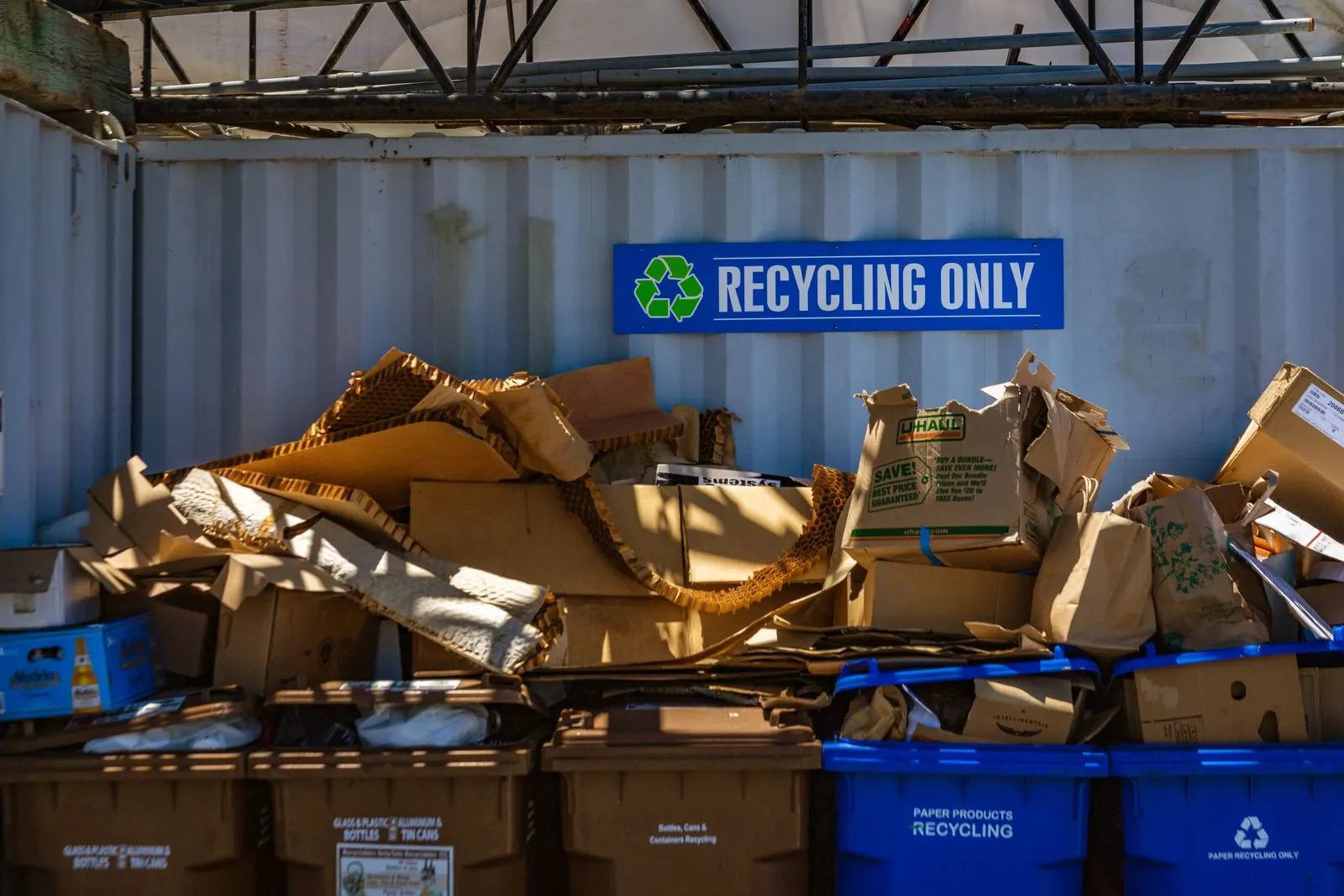
Choose the market where the customer receives the pack. Follow each component through collection, sorting and a usable destination. Note where a person must separate, clean or return it. Then ask whether those instructions are realistic for that customer.
Read Recyclable Packaging, Designing for Recyclability and Take-Back Programs. The output is a proposed construction and clear disposal message, plus a list of route-specific evidence to obtain. This exercise distinguishes a technically interesting material from an operational recovery plan.
04 / 04
Exercise 3 · approve a print and measure the change
Bring the current dieline, artwork and a sample. Review the assembled orientation, final-size text, color target and any claim or warning. Identify which questions the digital proof answers and which require a physical trial.
Read Artwork Guidelines, Ink & Printing FAQs and Our Collective Impact. The output is a print brief and a comparable baseline: component weights, quantities and a named final revision. A proposed material saving should remain labeled as a calculation until the production result is measured.
A useful meeting decision
Illustrative outcome: test a lighter insert with the same product and transit sequence; record failures and weight; retain the approved artwork revision. This is a concrete next step a team can evaluate.
Official and first-party resources · reviewed October 7, 2026
Put the learning into your next pack.
Share your product, material questions and destination with Stowliva.