
Jewelry brand pouch sourcing
Jewelry Pouches: Cotton, Velvet or Microfiber? A Buyer’s Guide
Choose the fabric and usable space around the piece, then check what the finished pouch can actually do.
Choose jewelry pouches by the finished fabric, inside space, seams and closure, then evaluate them with the actual pieces. Cotton, velvet and microfiber describe different aspects of a fabric; none of those names alone establishes scratch prevention, anti-tarnish performance or shipping protection. The useful comparison is how a specific construction fits your jewelry and packing process.
A necklace card that slides into an open pouch may stop fitting once the drawstring gathers. An attractive fabric can leave fibers on a polished pendant. For an independent brand, spotting these details in a prototype is more useful than choosing a material from a swatch photograph alone.

Which jewelry pouch material should an independent brand choose?
Choose the material by matching the pouch to the jewelry, not by picking the most “premium” fabric in isolation. Compare the visual texture alongside the fabric specification. Cotton identifies a fiber, velvet a pile construction, and microfiber a fiber description. Ask what each proposed cloth is actually made from and how it is finished, rather than treating the three names as complete material specifications. None of these materials should be described as universally anti-tarnish or crush-protective unless the finished specification includes proven supporting features and documentation.
For rings, earrings, and necklaces, the pouch is part presentation and part handling control. Separating pieces can limit contact between them, but the cloth, seams and any inserts also need to suit the jewelry. Soft packaging does not establish crush protection. GIA’s jewelry care guidance emphasizes separate storage and care by material, including special caution for gems such as pearls and opals, so your packaging copy should avoid one-size-fits-all care promises. (GIA jewelry care guidance)
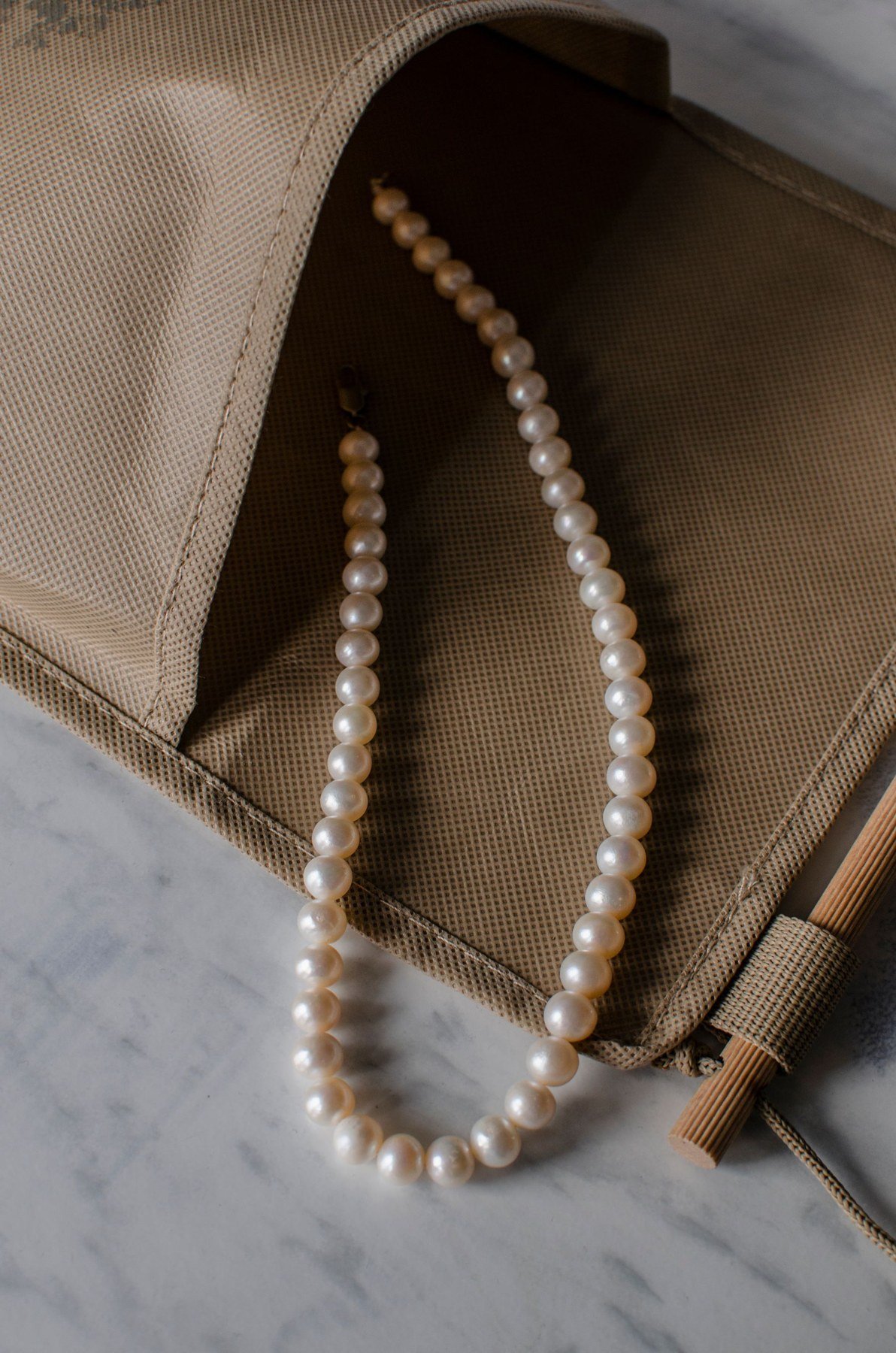
Compare cotton, velvet and microfiber on the same questions
This is a sampling checklist, not a performance ranking. Ask suppliers to identify the proposed construction so a price comparison does not quietly substitute a different fabric or lining.
| Question for the sample | Cotton option | Velvet option | Microfiber option |
|---|---|---|---|
| What is the fabric? | Confirm cotton percentage, blend, weight and finish; document any recycled-content claim. | Confirm pile fiber, backing, weight and finish. The velvet name does not tell you the fiber content. | Confirm fiber composition, fabric structure, weight and finish. |
| What touches the jewelry? | Inspect yarn texture, inner seams and any lining. | Inspect pile, backing, lining and bulky corners. | Inspect both cloth faces, cut edges and internal stitching. |
| Does it shed or transfer color? | Check the finished dyed and printed sample, including the inside. | Check loose pile, transfer and any residue from the finish. | Check shedding, dye and logo transfer; do not assume it is lint-free. |
| Does the closure work? | Load the actual item and gather the cords fully. | Check whether pile and lining crowd the gathered opening. | Check closure, seam tension and access to small pieces. |
| How much room is usable? | Measure inside the finished seams and below the cord channel. | Include the volume occupied by pile, lining and closure folds. | Check the same finished cavity with the actual item and card. |
| What claims are supported? | Request evidence for composition and any recycled content. | Request evidence for any claimed treatment or protective function. | Request evidence for any claimed treatment or protective function. |

Separate presentation, anti-tarnish storage and parcel protection
Soft jewelry pouches create a tactile first impression: the customer feels the cloth, sees the logo, and opens a small branded package before reaching the piece. That is presentation. It supports perceived care, giftability, and collection coherence, especially when pouch color, cord, logo placement, and care-card design are consistent across SKUs.
Functional protection is different. A pouch may help separate items and reduce surface contact, but it does not replace a rigid box, fitted insert, or shipping cushion. UPS packaging guidance focuses on securing and cushioning shipments in the outer package; soft jewelry bags should therefore be treated as inner presentation or organization, not the complete parcel protection system. (UPS packaging guidance)
Anti-tarnish storage is also a separate specification. The Canadian Conservation Institute explains that silver tarnish involves reactions with sulfur-containing gases, and its silver care guidance discusses storage and tarnish removal with caution because cleaning can remove some surface material. If you want anti-tarnish functionality, ask about the exact lining, strip, enclosure, or storage system and request evidence for that exact finished product. (Canadian Conservation Institute tarnish explanation)
The Institute’s separate silver care and storage note discusses sealed storage and suitable tarnish-inhibiting materials. That conservation guidance explains why a decorative drawstring pouch should not automatically be sold as an anti-tarnish enclosure. It does not certify any Stowliva pouch.
Care also depends on the piece. GIA’s jewelry travel guide discusses keeping pearls separate and using a soft, breathable cloth pouch. Do not turn a storage approach for silver into universal instructions for pearls, opals, mixed-material pieces or treated gemstones. Ask the jewelry maker to approve the care card for the actual collection.
A worked sizing example: measure below the closure
Imagine a brand selling three pieces: a slim ring, stud earrings on a 50 x 50 mm card, and an 18-inch necklace on a 70 x 90 mm card. A flat pouch that measures 80 x 100 mm may sound large enough for the necklace card, but the usable height could shrink once the drawstring channel is sewn and gathered. The card may also push into the side seams, creating a tight fit that wrinkles the pouch and hides the logo.
Illustrative dimensions only: suppose an 80 × 100 mm outside sample has 5 mm inward seams on each side and a closure area that occupies 20 mm at the top. Its nominal flat inside space would be about 70 × 80 mm before allowing for fabric thickness and gathering. That would already be too short for a 70 × 90 mm necklace card. These are made-up dimensions to explain the calculation, not a size recommendation.
A more useful brief defines finished usable space, not only the outside measurement:
- Ring pouch: interior should allow the ring box, ring card, or mini insert to slide in without pressing against the seams.
- Earring pouch: card corners should clear side seams and closure folds.
- Necklace pouch: chain should not bunch at the top channel, and the pendant should sit below the gathered closure.
- Travel pouches: test with the actual jewelry plus care card, not a paper template alone.
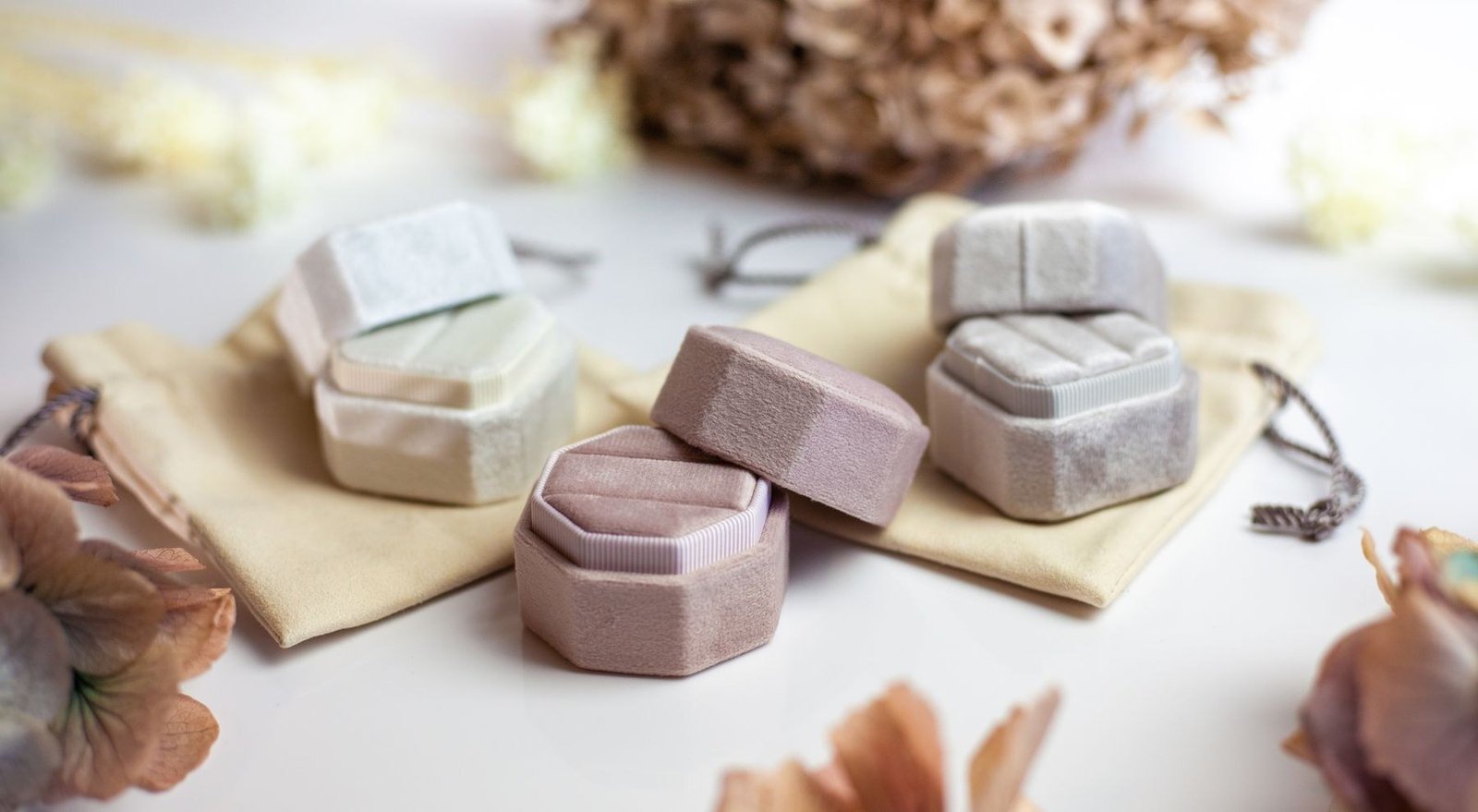
Confirm artwork, claims and available supplier options
For custom jewelry pouches, artwork needs to survive the real fabric and print method. Adobe’s print-bleed guidance is useful for the printed care card or paper insert. Confirm the printer’s bleed and safe-area requirements for those pieces; a fabric logo needs a separate placement drawing and process specification. For pouches, also provide logo size, placement from the finished edge, preferred print or embroidery method, Pantone references if relevant, and a tolerance for placement shift. (Adobe print-bleed guidance)
Environmental and material claims need the same discipline. The FTC Green Guides warn against broad, unqualified environmental claims and require support for claims such as recycled content, recyclable, or compostable. If your pouch uses cotton, recycled cotton, polyester velvet, or microfiber, describe the verified attribute of the exact item rather than calling the whole packaging system “eco-friendly” without qualification. (FTC environmental-claims guidance on eCFR)
If you are exploring Stowliva options, start with custom drawstring bags, coordinate higher-structure gifting with custom jewelry boxes, compare a fitted packaging insert for restraint and a separate custom card for care information, and compare physical materials through sample kits. Confirm current fabric options, lining choices, anti-tarnish treatments, sample availability, and production details by inquiry; do not assume every material or treatment compared here is stocked for every order.
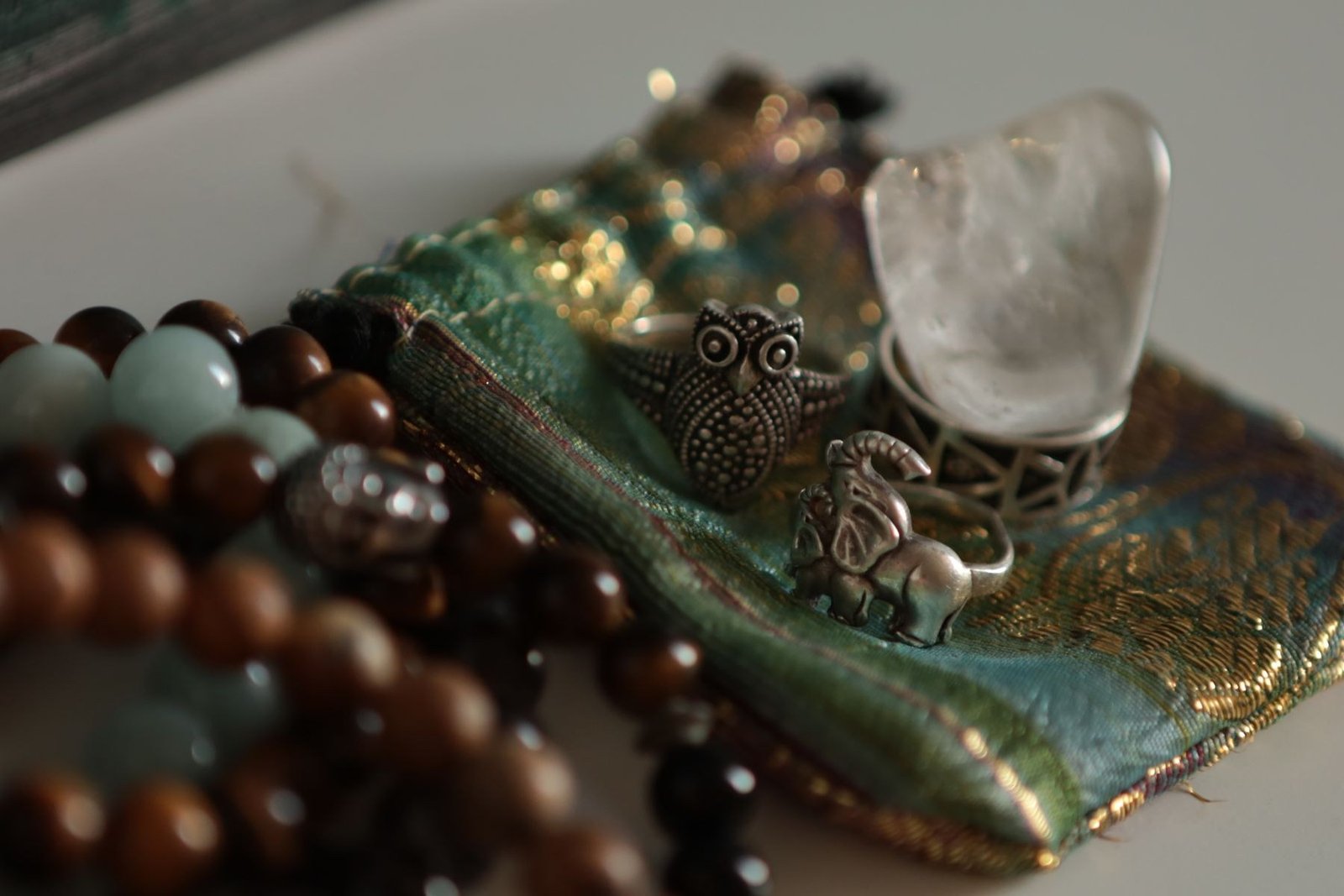
Inspect the prototype with the actual assortment
Use the prototype with real jewelry, not only as a visual swatch.
- Check fiber label or supplier specification for composition and recycled-content documentation, if claimed.
- Insert the actual ring, earring card, and necklace card; close the pouch fully.
- Measure finished usable width and height after seams, lining, and drawstring channel.
- Use a white-cloth rub check on a spare pouch to screen for loose fibers and visible transfer. Agree any formal colorfastness test with the supplier; do not use valuable jewelry as a test specimen.
- Use representative samples or nonvaluable stand-ins to check chain restraint, exposed earring posts and pressure points. A gentle movement check does not validate transit performance.
- Inspect seams for loose threads, sharp corners, bulky knots, and uneven stitching.
- Confirm logo position when the pouch is flat and when the closure is gathered.
- Place the pouch inside the intended mailer, box, or jewelry case and test the full pack.
Keep the smallest piece and the bulkiest packed combination in the trial. An earring card and its backs may take more depth than the flat drawing suggests. Check that a pendant remains below the cord channel, a clasp does not catch an internal seam, and the customer can remove the piece without pulling on a delicate chain.
Time several packing cycles with the proposed card, pouch and box. Record misloads and rework before deciding whether one pouch size is practical. A second size may improve fit but adds separate stock, minimum quantities and reorder points; calculate those tradeoffs from your trial rather than assuming that fewer sizes always cost less.
Send a concise, comparable quote brief
Send suppliers a short, complete brief so quotes are comparable:
We need branded jewelry pouches for rings, earrings, and necklaces. Please quote cotton, velvet, and microfiber options if available, and confirm fiber composition, lining, seam style, closure, finished usable dimensions, logo method, dye-transfer testing, lint expectations, MOQ, sample route, lead time, and documentation for any recycled-content or anti-tarnish claim.
For the construction details, read the drawstring bag buying guide. Compare the jewelry box guide if presentation needs a more rigid format, and the packaging inserts guide for restraint within a box. A general sample kit helps compare available materials; request a custom prototype to approve the complete pack.
Send Stowliva your pouch brief with the jewelry type, card dimensions, finished usable space, quantity per size, artwork, destination and sample deadline. Identify presentation, storage and shipping expectations separately so the proposal answers each function with a defined component.
Jewelry Pouches: frequently asked questions
Which material is best for jewelry pouches?
There is no universal best fabric. Compare the actual fiber composition, surface, lining, seams, lint, color transfer and closure with the intended jewelry. Cotton, velvet and microfiber names alone do not establish protective performance.
Do ordinary jewelry pouches prevent silver tarnish?
Do not assume so. Soft presentation and anti-tarnish storage are different functions. Request evidence for any specific treatment or protection claim and confirm that the complete storage system suits the jewelry.
How do I measure a jewelry pouch?
Measure the complete item and any card or inner wrap, then agree the finished usable width and depth below the closure. Test loading and removal with a physical sample; outside dimensions do not define the usable cavity.
Can jewelry pouches replace shipping boxes?
A soft pouch does not establish crush or impact protection. Evaluate a suitable box, restraint and cushioning for the jewelry and distribution route, using the complete loaded pack.
Does Stowliva offer every fabric compared in this guide?
This guide compares sourcing considerations. Stowliva’s custom drawstring bag product provides a starting point for an inquiry; confirm available fabrics, sizes, printing, quantities and any requested treatment for your order.
About this guide: Prepared by Stowliva Editorial using the linked references, reviewed October 21, 2026. Reference photos show independent applications. Confirm specifications for your order.