Chocolate packaging selection guide
Custom Chocolate Boxes: Which of These 5 Styles Fits?
Choose the presentation, fit the real chocolates and validate the complete pack before you order.
Quick answer: Choose custom chocolate boxes by the chocolate format, piece count and sales channel. A folding carton can suit everyday retail; a rigid or drawer box can suit gifting; a window box shows the assortment. Specify the food-contact tray or liner separately, then validate the complete pack for storage and delivery.
A beautiful box loses its appeal when the first customer opens it and finds a truffle stuck to the lid. The right chocolate packaging starts with the pieces inside: their height, coating, filling, fragility and arrangement. The logo comes after those decisions.
This guide compares five practical formats for chocolatiers, confectionery brands and corporate gifting teams. Use it to build a clearer brief for Stowliva custom chocolate boxes, then approve a physical sample. These are sourcing recommendations, not claims that any pictured box or catalogue construction has passed food-contact or transport testing.
Which of these five chocolate box styles fits your order?
Start with how the customer receives the product. A box carried home from a shop has different demands from an assortment delivered through a parcel network. Compare formats before comparing decorative finishes.
| Style | Useful starting point | Main trade-off | Sample check |
|---|---|---|---|
| Folding carton | Everyday retail ranges and compact storage | Board and folds must support the loaded tray | Base stays closed and corners remain square |
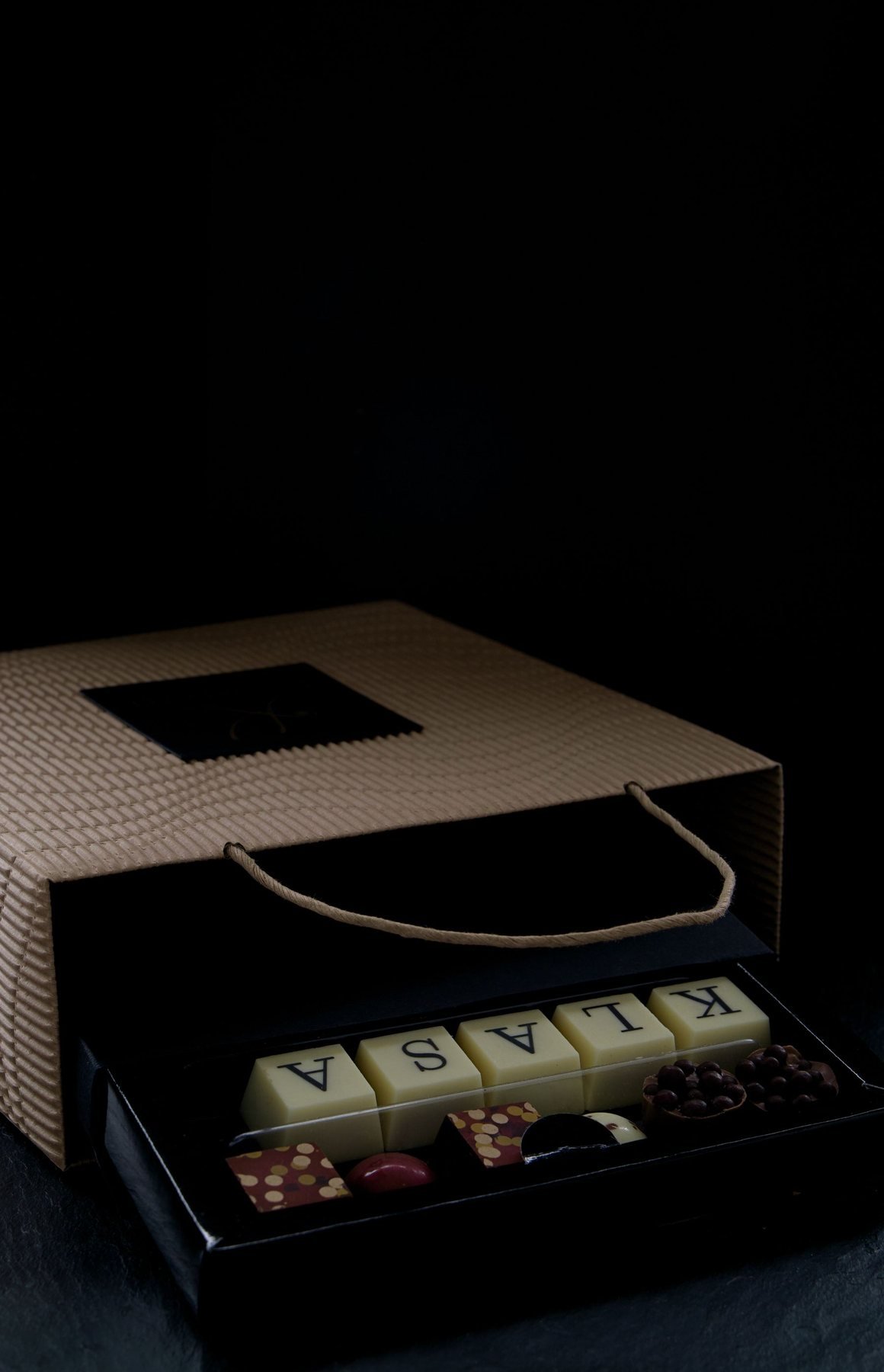
| Rigid lift-off box | Gift assortments and presentation sets | Assembled storage volume and added material | Lid opens smoothly without lifting the tray |
| Drawer box | A reveal that presents the chocolates in a row | Sliding friction and retention need tuning | Tray slides without jolting the pieces |
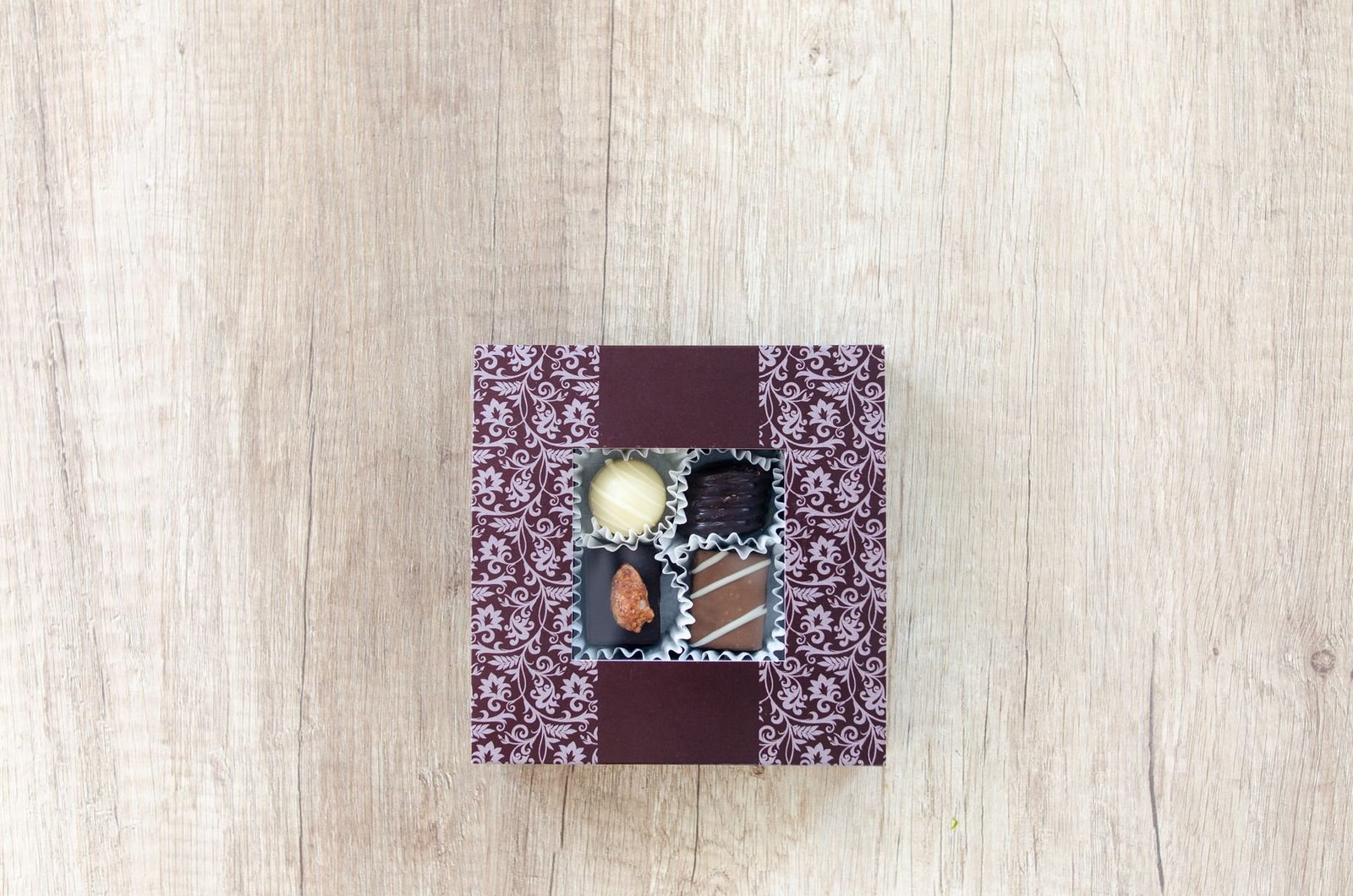
| Window box | Visible assortments on a retail counter | Window attachment, scratching and light exposure | Window stays clear of the tallest decoration |
| Corrugated presentation mailer | Delivery projects needing an outer structural layer | Appearance alone does not establish parcel performance | Complete pack protects pieces after route testing |
These are starting points, not a ranking from cheapest to best. Size, board, printing, tray construction and order quantity can change the price relationship. Request comparable specifications from each supplier. If you are exploring broader formats, compare the custom gift box range and custom retail boxes alongside your chocolate-specific design.
A seasonal range can sometimes share a structural box with a changed sleeve, card or label. That is useful only if the chocolate arrangement stays compatible. A new piece count or taller topping may require a new tray even when the outside artwork barely changes.
How do you size the tray without crushing the chocolates?
Measure representative finished pieces, including cups, wrappers and decorations. Record the largest width, length and height within each shape group. Send actual samples when possible; a nominal mould size does not capture every finished edge or topping.
Work from the inside out: chocolates, cups or cavities, tray, then outer box. A tray should limit movement while allowing staff to load the assortment without scraping its finish. Check finger access too. A snug cavity that makes a bonbon hard to remove creates a poor gift experience.
- Load the full assortment rather than one perfect sample.
- Close the lid and inspect clearance above the tallest piece.
- Lift, carry and reopen the packed box in its intended orientation.
- Check whether cups tilt, dividers flex or pieces change position.
- Record the approved arrangement with photographs and a tray drawing.
For a new insert project, use the packaging insert comparison to discuss structural options. The custom insert product page is a starting point for a fit discussion; food-contact suitability must still be confirmed for the specific construction.
Which layers can touch the food?
Separate the decorative box from every layer that touches the chocolates. The tray, paper cups, liner, wrapper, coating and adhesives can have different intended uses. A paper description such as recycled, acid-free or premium does not establish suitability for direct food contact.
The FDA explains that food-contact substances are assessed under their intended conditions of use. Ask the supplier to identify the material, intended food type, contact time and temperature behind its supporting documents. A generic statement about a raw material is less useful than evidence that covers your finished contact layer.
For products placed on the EU market, the European Commission’s food-contact materials overview describes the framework for safety and manufacturing practice. Confirm applicable requirements for the material and destination with the responsible food business and its compliance adviser before releasing the pack.
A practical approval file identifies each component and its role. For example: outer printed carton, separate tray, individual cup and sealed inner wrap. Mark which surfaces can touch chocolate and which stay outside the contact system. Keep that file tied to the material specification so a later substitution receives a fresh review.
What protects aroma and appearance during storage?
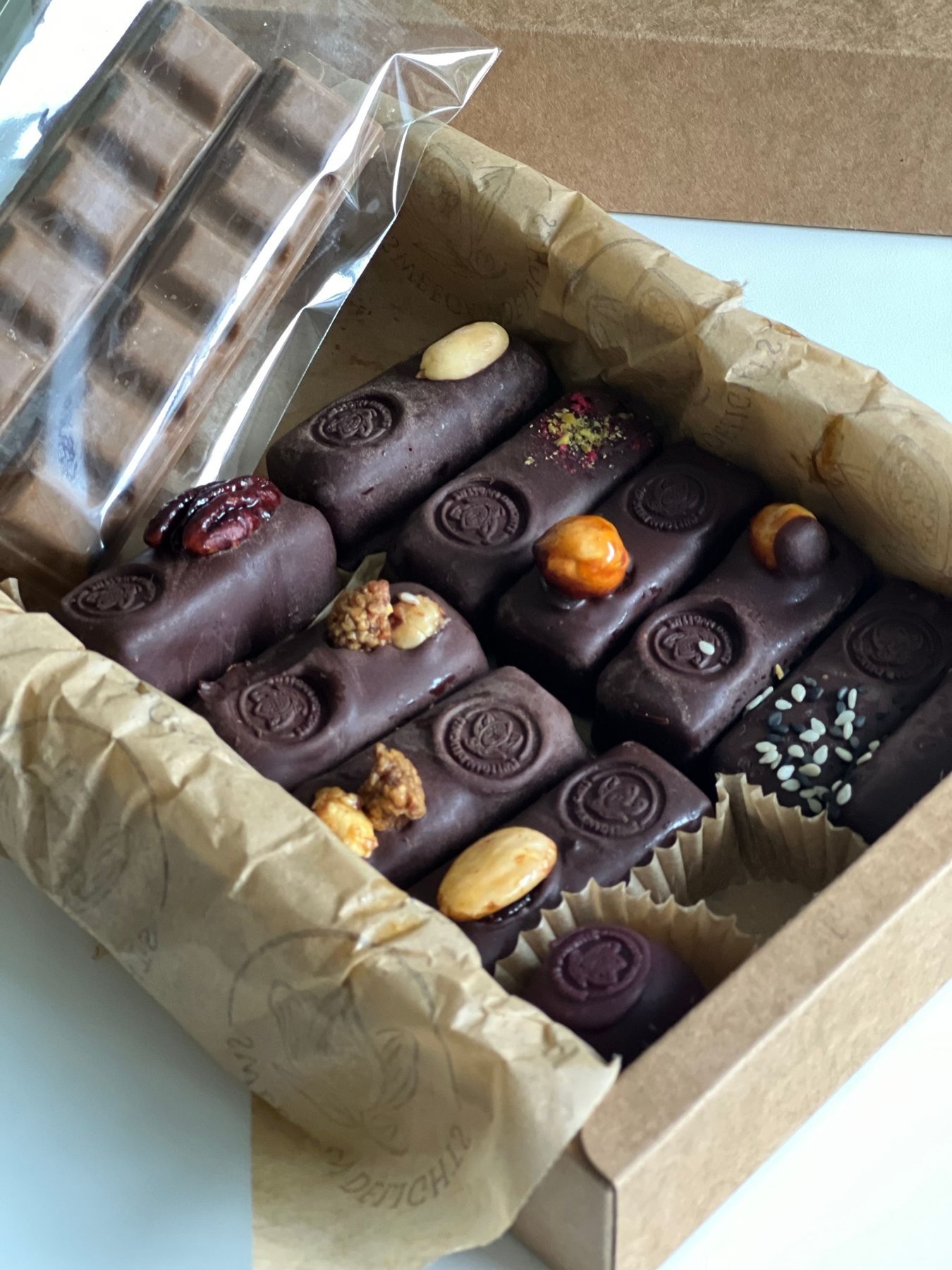
A sturdy gift box is not automatically an aroma or moisture barrier. Define which layer provides that function and validate it with the actual recipe. Different fillings can have different storage needs, so avoid applying one shelf-life assumption to the entire range.
Callebaut’s confectionery storage guidance recommends odor-free packaging and avoiding light, strong smells and condensation. It gives 12–18°C as an ideal storage range for pure chocolate; that is not a universal shelf-life specification for filled bonbons or a guarantee for a delivery route.
For your approval sample, evaluate packaging odor before loading and inspect the product after the planned storage period. Keep samples away from fragranced displays, cleaning products and scented gift items. If you need a protective inner wrap, assess it separately from the outer printing.
Warm-weather delivery needs its own plan. Consider the route, transit time, possible delays and the temperature sensitivity of the recipe. An insulated pack or coolant introduces more components and may introduce condensation risks. Trial the proposed system under relevant conditions before promising customers a result.
How do you print a premium box that stays readable?
Build the artwork around a confirmed dieline and tray. Reserve space for required food information before adding a large logo, foil border or story panel. Keep critical copy away from folds, glued seams and areas hidden by a sleeve.
The FDA’s food allergen guidance explains major-allergen disclosure for foods within its scope. The practical design implication is to approve the exact ingredient and allergen information with the food business for each assortment. Decorative artwork should never make that information hard to find or read.
Ask for a finished print sample when colour, foil or texture matters. A screen proof can confirm layout, but it cannot show scuffing, a rough fold or how a small logo behaves on textured paper. Examine the box under typical shop lighting and check it after staff have packed several units.
Use custom folded cards for a brand story or flavour guide when suitable. Keep required information in the appropriate place on the final pack. If you want coordinated external wrapping, discuss printed tissue paper for the outer presentation; confirm its intended use before any contact with unwrapped food.
What should you test before approving bulk production?
Approve a loaded sample of the finished system, not only a flat printed sheet. Write down what a pass looks like: pieces remain in place, the lid closes, required information stays readable and the contact layers match the documented specification.
For delivery orders, choose testing that reflects the channel. ISTA describes test families for packaged products and transport hazards. Ask a packaging specialist or lab which procedure fits your route. A home shake check can identify obvious movement; it cannot establish transport qualification or thermal performance.
Have the team pack a small pilot run using the proposed workflow. Time assembly, look for loading errors and inspect the last packed box as carefully as the first. If staff must force a tray into place or repeatedly clean smudges from the window, fix that before increasing order volume.
Also review environmental copy. The FTC’s Green Guides summary cautions against broad unsupported environmental claims. Describe a documented feature precisely and consider the finished combination of board, window, coating and tray. Brown paper alone does not prove that the complete gift pack is recyclable.
A copy-ready brief for your next chocolate box quote
Use this brief to keep supplier responses comparable. Attach a drawing and photographs of the actual chocolates, and identify any point that still needs development.
- Product: chocolate shapes, finished dimensions, piece count and representative samples.
- Contact system: cup, tray, liner or wrapper; intended food, contact time and storage conditions.
- Structure: preferred format, internal layout, lid action and flat or assembled supply.
- Artwork: dieline version, colours, finishes and approved food information.
- Channel: shop collection, gifting or parcel delivery; expected route and temperature exposure.
- Commercial scope: quantities by SKU, replenishment plan, packing location and delivery date.
- Approval: required documents, sample checks, pilot packing and any lab testing.
Calculate cost per usable packed unit rather than comparing the empty box price alone. Include the tray, assembly time, wrapping, storage and delivery pack. A simpler finish can be the better choice when it frees budget for a reliable insert or more consistent packing.
Send Stowliva your chocolate box brief with the product samples and delivery plan. Confirm current materials, quantities, documentation and lead times for the exact order.
Frequently asked questions
Which custom chocolate box style should I choose?
Choose a folding carton for compact retail storage, a rigid or drawer box for gifting, or a window box for visibility. Parcel orders also need a validated outer shipping system.
Can chocolate touch printed cardboard?
Do not assume it can. Confirm that every contact layer is suitable for the intended food, temperature and contact time, with documentation for the target market.
Will a rigid box stop chocolate melting?
No. A rigid box provides structure and presentation; it does not establish temperature control. Validate the recipe, packaging and delivery conditions together.
What should I send for a chocolate box quote?
Send representative chocolates or measured samples, piece count, tray plan, target market, artwork, order quantity and delivery conditions. Identify which layers contact food.
Research notes: Primary sources are linked beside the relevant claims. The comparisons and sample checklist are Stowliva Editorial’s sourcing recommendations, not published test results. Sources checked October 7, 2026.
Editorial note: Five newly sourced, licensed real photographs illustrate this article. Product specifications, certification scope and claims must be confirmed for each order.