Retail and event gift-set planning
Custom Gift Bags: Will One Size Fit Every Gift Set?
Build a coordinated gift set that fits, carries comfortably and stays practical to pack throughout the year.
Choose custom gift bags by the complete gift set: its packed footprint, height, weight and presentation layers. One size can suit a narrow assortment. Compare two sizes when small sets look lost, large sets strain the opening, or delicate items need additional inner packaging. Approve the filled set before printing.
For a boutique or event team, the practical decision is how many sizes cover the real assortment without slowing the packing table or stranding seasonal stock. Start with the smallest, most common, largest and heaviest combinations. A coordinated bag, inner pack and removable card system makes that comparison concrete.

Will one size fit every gift set?
Sometimes one size works, but only when your smallest and largest assortments are close enough in footprint, height, and packed weight to share the same bag without looking empty or strained. If your gift sets range from a small candle-and-card bundle to a tall bottle, ceramic item, or boxed corporate hamper, one size usually becomes a compromise: too much void for small sets, too little stability for large ones, or too many improvised fixes at the packing station.
For Stowliva’s independent retail brands, the better starting point is the gift-set range, not the artwork. Map the smallest sellable set, the most common set, and the largest seasonal or event bundle. Then decide whether one bag can serve all three, or whether two bag sizes could improve the fit without adding excessive stock complexity.
Quick answer
Choose one bag size when your gift sets share similar dimensions, are lightweight enough for the selected construction, and can be presented neatly with the same tissue and card system. Choose two bag sizes when your range includes both compact and bulky assortments, delicate items that need inner boxes, or corporate/event bundles that vary by recipient tier.
The goal is not to order more packaging for its own sake. It is to protect the gift experience from edge cases: the tiny set swimming in a large bag, the large set forcing handles apart, the fragile item pressed against a neighboring product, or a seasonal message printed permanently on bags you still need after the event.
Start with the smallest and largest assortments
Before choosing custom printed gift bags, build a simple fit map. Place every item in the set exactly as it will be handed over or shipped onward: primary packs, labels, tissue, ribbons, cards, sleeves, protective wrap, and any inner boxes. Measure the outermost packed dimensions, not the product dimensions from a catalogue.
Your smallest assortment matters because it sets the lower limit for presentation. A small jewelry box, soap duo, mini skincare set, or gift card bundle may feel lost in an oversized carrier unless tissue is doing too much visual work. Your largest assortment matters because it tests gusset depth, opening clearance, handle comfort, and whether the bag can stand upright while being packed.
For many retail brands, the “middle” gift set is the one bought most often, but the smallest and largest sets reveal the real packaging risk. If those two extremes work, the middle usually becomes easier to refine.
What to record before you brief the bag
- Finished size of each packed gift set: width, depth, and height.
- Actual packed weight of the full set, including the bag, tissue, card, and inner boxes.
- Whether products are rigid, soft, sharp-edged, fragile, liquid-filled, or unevenly weighted.
- How the set is sold: in-store pickup, event handout, courier delivery inside an outer shipper, or all three.
- How many seasonal messages need to change during the year.
- Whether the bag must fit under a table, inside a carton, or on a retail shelf before use.
This is also the right time to compare Stowliva formats such as premium shopping bags and custom printed twisted handle paper bags. The decision should come from the packed set, not from a flat artwork preview.
Compare one bag size with two bag sizes
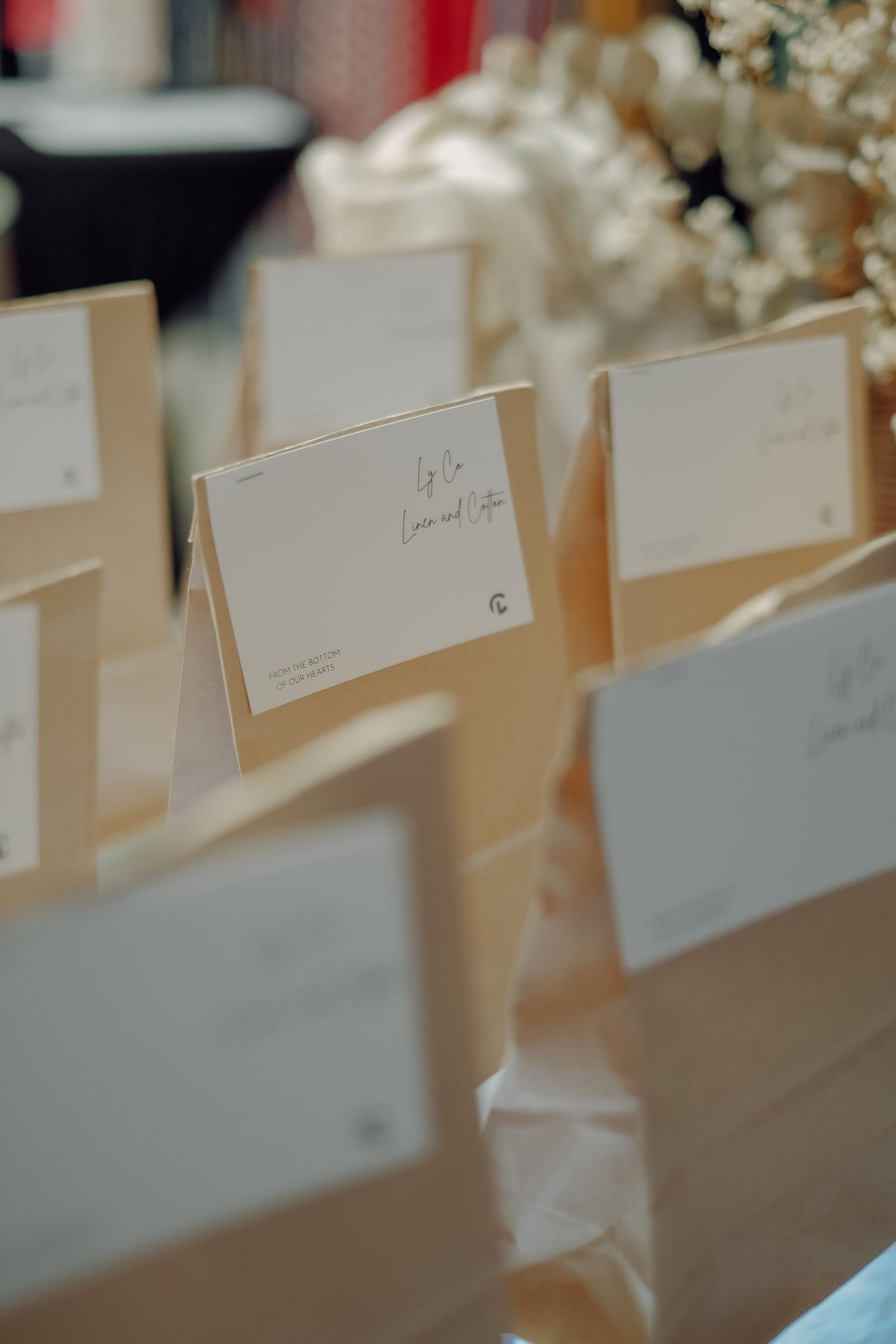
One size can simplify purchasing, storage, and staff training. It can also make brand presentation consistent across quick gifting moments, especially when the gift range is narrow. But one size only stays efficient if it does not create hidden costs elsewhere: excess tissue, more void fill, awkward packing, or a bag that looks underfilled for lower-value sets.
Two sizes can provide more control across a varied assortment. A small bag can serve entry gift sets, party favors, boutique purchases, or staff appreciation bundles. A larger bag can serve premium sets, event speaker gifts, corporate client assortments, or mixed-product seasonal bundles. The trade-off is more stock keeping, more reorder planning, and a slightly more detailed packing guide.
Decision point | One bag size may work when… | Compare two bag sizes when… |
|---|---|---|
Assortment range | Products are similar in volume and height | Small and large sets look visibly different |
Presentation | Tissue can finish the set without hiding poor fit | Tissue is being used to disguise empty space |
Delicate items | Products already have protective primary packs | Items need inner boxes or separation |
Events | Every attendee receives the same set | VIP, staff, press, and client tiers vary |
Packing speed | Staff can pack without choosing a format | Format choice prevents rework and repacking |
Stock control | Storage space is tight and sales mix is predictable | Compare savings in filler and labor with additional stock costs |
The table is a planning tool, not a universal rule. A brand selling compact cosmetics may need one carefully chosen size. A corporate gifting program combining notebooks, mugs, snacks, bottles, and cards may need two sizes even before the artwork conversation begins.
Inner boxes keep delicate gifts from becoming bag problems
A gift bag is a presentation and carrying layer, not a substitute for a fitted protective pack. Delicate items such as glass, ceramics, candles, fine stationery, small electronics, or decorated food gifts often need an inner box, divider, sleeve, or wrap before they go into the bag. If the bag is expected to solve movement, impact, and product separation by itself, the specification is doing too much.
For fragile or premium assortments, consider pairing branded gift bags with custom gift boxes for the items that need structure. The bag then carries the finished set; the inner packaging provides the structure around the delicate component; evaluate its protection with the actual product. This is especially useful for event gifting, where bags may be handled in batches, placed under chairs, loaded into cars, or transferred between venues.
UPS packaging guidance emphasizes using suitable boxes, cushioning, and secure packing for shipments, with the shipper responsible for adequate protection. That principle applies well to gift systems too: if a bagged gift set will enter a parcel network, validate the inner and outer packaging together rather than assuming the decorative layer is enough. (UPS packaging guidance)
Use removable cards and tissue for seasonal messages
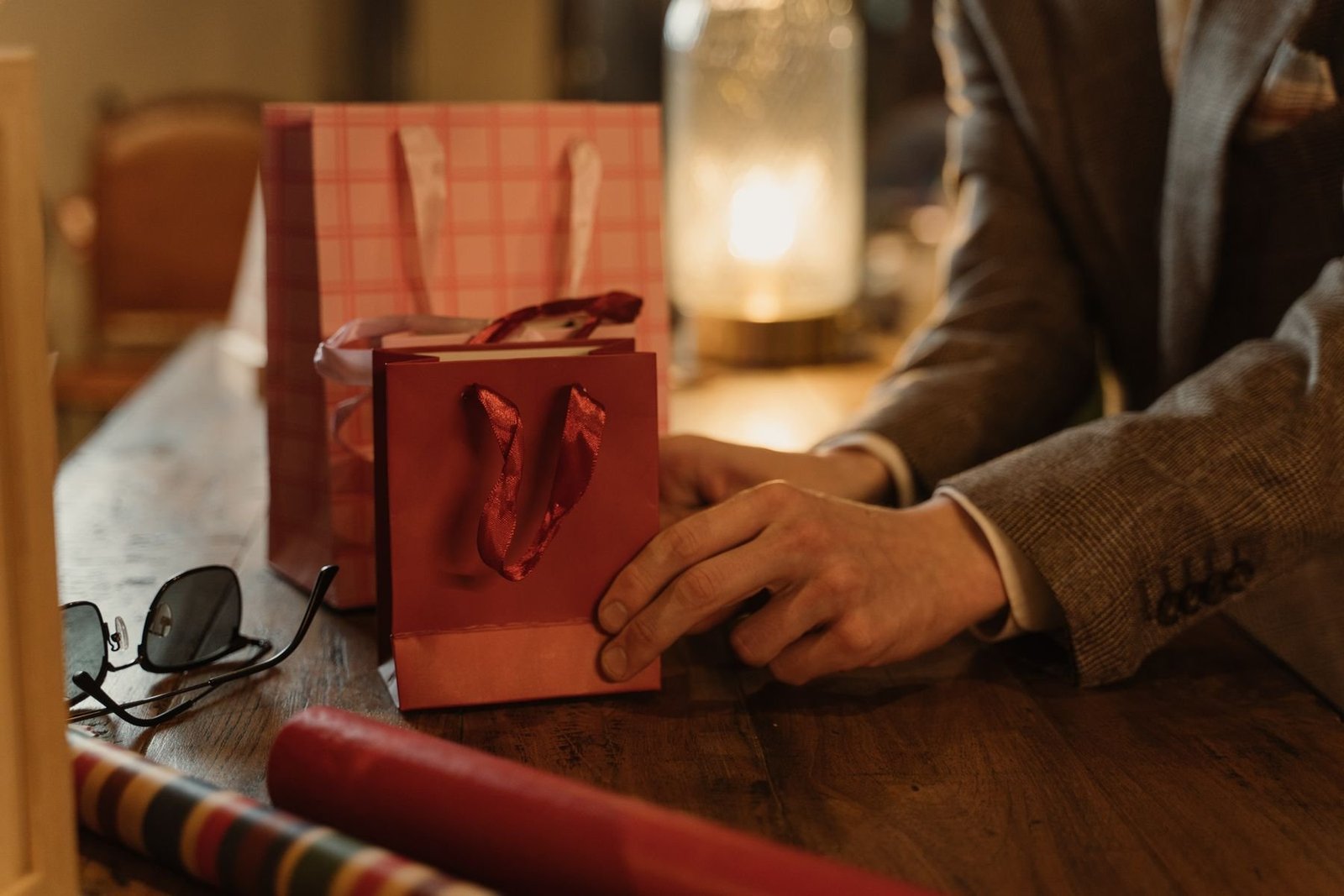
Seasonal campaigns often tempt brands to print everything directly on the bag: holiday graphics, event dates, limited-edition slogans, or sponsor messaging. That can work for a large, fixed-use event, but it can leave leftover stock that feels dated. A removable card and tissue system gives you more flexibility.
For example, the same custom gift bags can carry a spring launch, holiday thank-you, wedding welcome, or corporate onboarding set if the changeable elements sit on a card, hang tag, belly band, sticker, or tissue pattern. The main bag can hold the evergreen brand identity, while the insert carries the temporary message.
Consider tissue wrapping paper as a presentation layer and compare its size and feel with your proposed bag. It does not replace cushioning for delicate gifts. This approach can help independent retailers keep bags useful beyond one season. It also helps corporate/event gifting teams manage variations: one bag, several recipient cards, different tissue colors, and a packing table that can switch message by batch.
A practical seasonal system
- Keep the bag artwork evergreen: logo, brand color, simple pattern, or minimal line art.
- Use removable cards for campaign copy, recipient names, event details, QR codes, or sponsor notes.
- Use tissue to signal season or tier without changing the whole bag.
- Separate card versions clearly at the packing station so staff do not mix messages.
- Photograph one approved packed example for each seasonal or event version.
If you are preparing artwork that prints to the edge, include bleed correctly in the file. Adobe’s print guidance notes that bleed extends artwork beyond the trim edge, and that 0.125 in / 3 mm is standard in many workflows, though printers may require a different value. Always follow the supplier’s dieline and proof requirements. (Adobe print-bleed tutorial)
Load handling belongs in the brief, not the complaint file
Do not assume that all custom printed bags have the same carrying performance. Load handling depends on the finished construction, paper or board selection, handle type, handle attachment, gusset, base, humidity exposure, product shape, and how the bag is used. A compact dense set can stress a bag differently from a larger but lighter textile gift.
Ask for a clear recommended use case and sample approval process for the exact bag you plan to order. The Paper Bag’s description of its carrier-bag guidelines references EN13590 for testing finished paper bags, which is a useful reminder that performance should be specified and tested rather than guessed from appearance. (The Paper Bag carrier-bag quality guidance)
A routine loaded handling check is a useful first screen. Pack the real set, lift it by the handles, place it down, carry it a short distance, and check whether the base bows, the handles pull, or the products shift. Record what happens with the actual load. This screen can reveal obvious weaknesses, but it does not establish a rated capacity or replace a defined test. The industry publication does not prove that every paper gift bag meets the same load or reuse target.
Make the packing station match the gift system
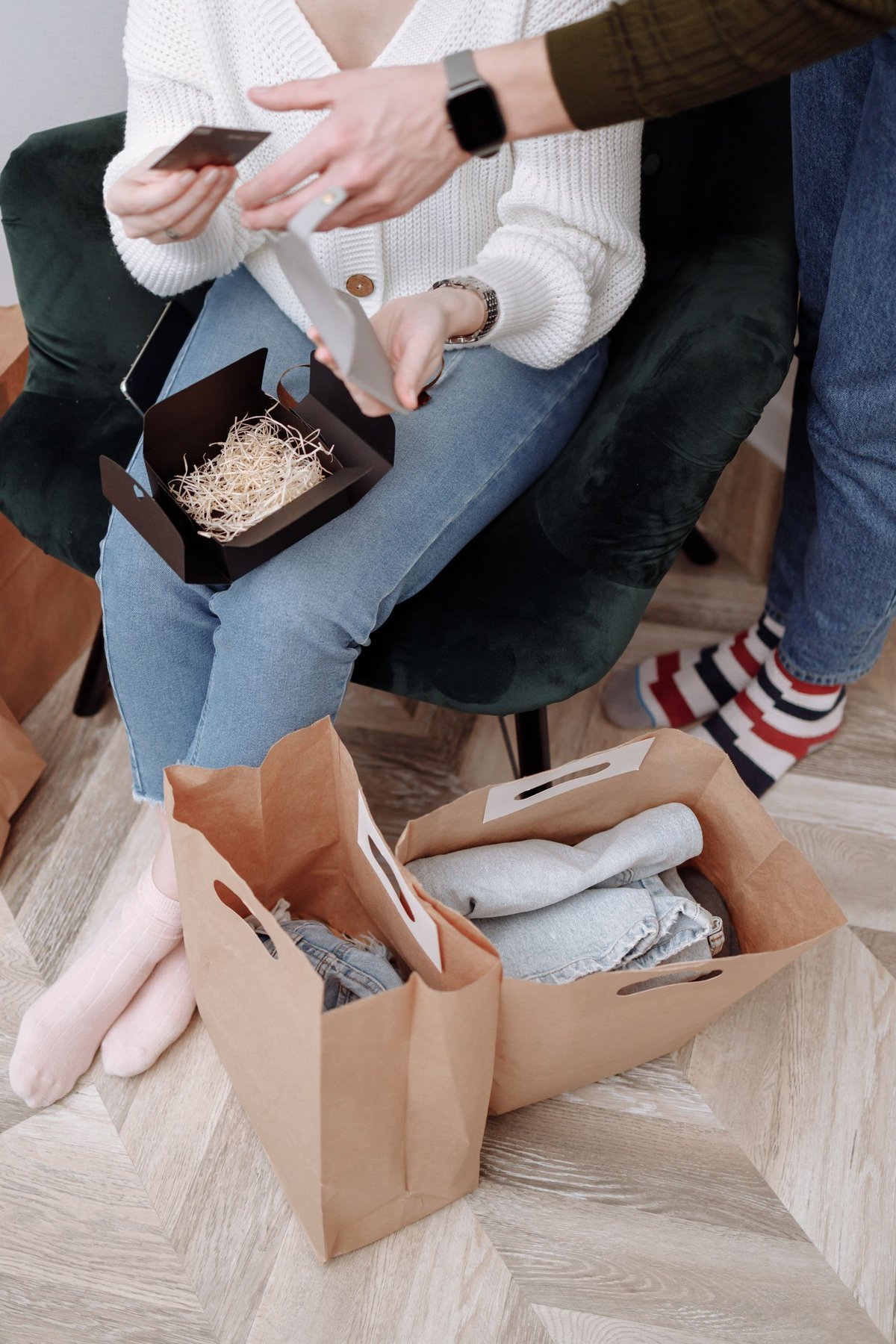
Even well-designed personalized gift bags can fail operationally if the packing station is confusing. Event teams often work quickly, sometimes with temporary staff, volunteers, or retail associates borrowed from the floor. A clear setup prevents the wrong tissue, wrong card, wrong bag size, or missing inner box from reaching the recipient.
Create one station for each bag size or gift tier. Keep the smallest assortment components together and the largest assortment components together. Put inner boxes and delicate-item wrap before the bagging step, not after it, so protection is not treated as optional. Use a visible reference sample for each final set.
A useful station flow looks like this:
- Pick: products, primary packs, and any recipient-specific items.
- Protect: inner boxes, dividers, sleeves, or wrap for delicate components.
- Present: tissue, card, ribbon, sticker, or tag.
- Bag: correct size of branded gift bag.
- Check: weight, message, product count, and visual finish.
- Stage: finished sets by event table, delivery route, or recipient group.
For larger programs, order a sample kit before committing to the full run. A general sample kit helps compare available materials and finishes. Request a custom loaded prototype to approve fit and carrying behavior; the kit does not validate your finished gift set.
Illustration only: a multi-product fit example
The following example is hypothetical and for illustration only. It is not a specification, capacity claim, or pricing guide.
Imagine a boutique wellness brand preparing three gift sets for a corporate retreat. The smallest set includes a boxed soap, mini candle, and printed welcome card. The standard set adds a bath soak pouch and folded eye mask. The largest set adds a ceramic cup and a boxed full-size candle.
One medium bag might technically hold all three sets, but the smallest set could look underfilled, and the largest set might need too much arranging to sit safely. A two-size system may be cleaner: a small bag for the first two sets if the standard set still fits neatly, and a larger bag for the ceramic-and-candle set with inner boxes around the breakable items. The brand can keep one evergreen logo print and vary the tissue and removable card for different retreat groups.

Compare stock and total costs before choosing sizes
The cheapest-looking choice is not always the lowest landed cost. If one oversized bag requires extra tissue, extra storage space, slower packing, and more rework, the total cost of use may rise. If trial packing shows less filler or rework with two sizes, compare that benefit with separate minimum quantities, storage and slower stock turnover. No savings follow from the number of bag sizes alone.
Track costs at the system level: bags, inner boxes, tissue, cards, labels, shipping cartons, storage space, spoilage, and staff time. For corporate/event gifting, also consider whether unused seasonal stock can be reused. Evergreen bags with removable messaging usually give more flexibility than event-specific bags that cannot move into the next campaign.
Environmental and disposal claims also need care. The FTC Green Guides advise marketers to qualify environmental claims where needed and avoid broad claims that imply benefits without support. (FTC environmental-claims guidance) FSC explains that its on-product labels communicate different sourcing categories, so use FSC language only when the specific material, supplier documentation, and label approval support it. (FSC label meanings) How2Recycle states that its label provides disposal instructions for each packaging component, which is helpful when a gift set combines bags, boxes, inserts, labels, and wrap. (How2Recycle component-label explanation)
Quote checklist for custom gift bags
Before you request a quote, gather the information that makes pricing and recommendations comparable.
- Smallest, most common, and largest packed gift-set dimensions.
- Packed weight for each assortment, including all inserts and presentation layers.
- Product types: fragile, sharp-edged, liquid-filled, soft goods, food-adjacent, or boxed.
- Preferred number of bag sizes: one, two, or open to recommendation.
- Bag style, handle preference, color, finish, and brand artwork requirements.
- Whether you need custom printed gift bags, a mix of printed and stock components.
- Inner boxes, tissue, cards, tags, stickers, ribbon, or dividers required.
- Event date, packing date, and whether leftover bags must work after the campaign.
- Any sustainability, sourcing, or disposal language you want reviewed before printing.
- Delivery locations and whether bags will be used in-store, at events, or inside shipping cartons.
Keep a dated packing photograph, the approved bag specification and the component list for each gift tier. Review the set when a product changes shape, weight or primary packaging. For artwork details, use the artwork preparation guide; for the carrier structure itself, read the custom paper bags buying guide. This article focuses on coordinating the gift set and assortment.
Send Stowliva your gift-set brief with the measured combinations, quantities per size, destination and required sample date. Ask to compare one-size and two-size proposals on the same contents and presentation standard.
Custom Gift Bags: frequently asked questions
Can one custom gift bag size fit every gift set?
Only if the smallest, largest and heaviest planned sets fit and remain practical to present, pack and carry. Compare real filled samples; a second size may suit a wide assortment better.
Should delicate gifts have a box inside the bag?
Evaluate a suitable inner box and restraint for delicate items. The handled outer bag presents and carries the set; it does not by itself validate protection for glass, jewelry or parcel shipping.
How can I personalize gift bags without reprinting each season?
Consider evergreen bag artwork with a replaceable gift card, tag or tissue combination. Check assembly time, readability and placement on a filled sample before approving the system.
Does a heavier paper guarantee a stronger gift bag?
No. Paper grade, construction, seams, handles, reinforcement and the actual load all matter. Ask for evidence relevant to the finished bag and evaluate loaded samples.
Are all paper gift bags recyclable?
No universal disposal claim follows from the word paper. Check the finished construction, coatings, attachments and the collection guidance in the intended market before printing instructions.
About this guide: Prepared by Stowliva Editorial using the linked references, reviewed October 20, 2026. Reference photos show independent applications. Confirm specifications for your order.