Translucent paper packaging guide
Glassine Bags: Are They Eco-Friendly? 8 Checks Before You Buy
Choose the right construction and usable size, then verify performance and environmental claims before you scale.
Glassine bags can make inner packaging feel clean, light and product-focused, but the material is often specified by appearance alone. That is where avoidable failures begin: the bag is too tight, the closure steals usable height, moisture protection is assumed, or an environmental claim is broader than the evidence supports.
What are glassine bags?
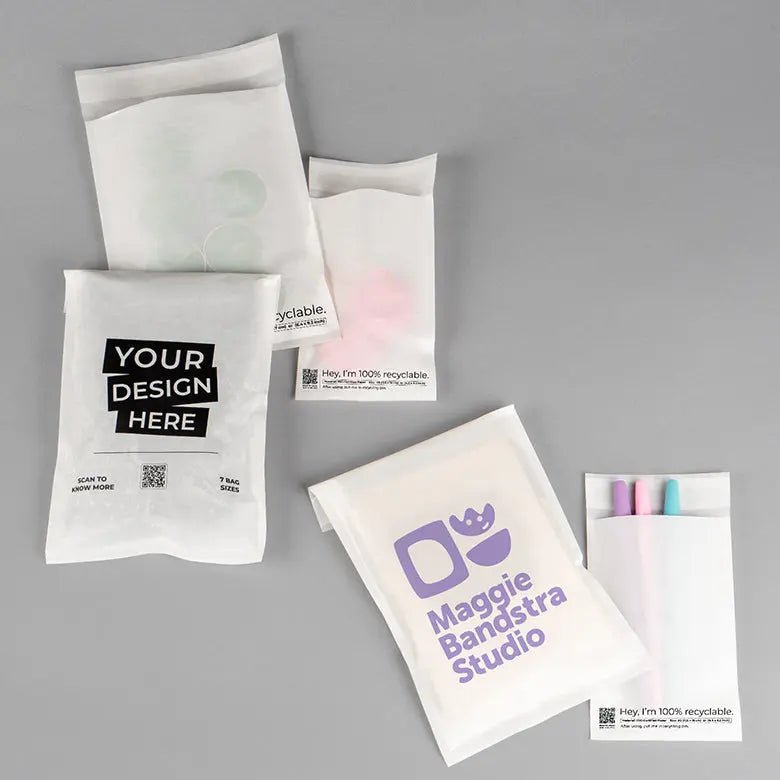
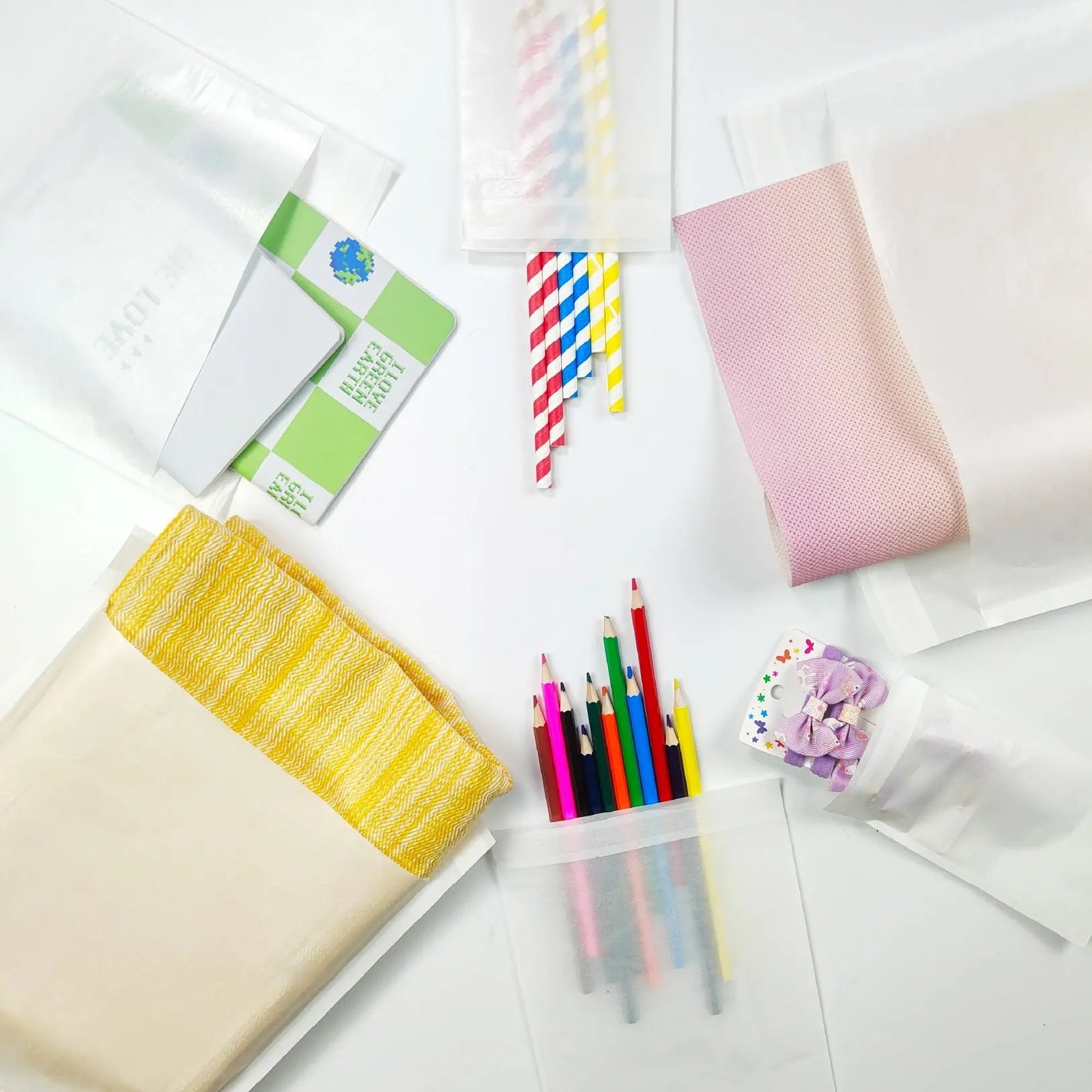
Glassine is a smooth, dense, translucent paper made by refining and calendering paper fibers. It can create a semi-transparent reveal without using a clear plastic film. That makes it useful for apparel, stationery, prints, baked goods with suitable food-contact documentation, cosmetics accessories and other dry goods. It is not the same thing as waxed paper, greaseproof paper or cellophane, and those names should not be treated as interchangeable.
The right specification depends on what the bag must do. A dry postcard and an oily snack impose different requirements. For food applications, buyers should review the intended food type, temperature and contact conditions against applicable rules, including the US provisions for paper in contact with aqueous and fatty foods and paper in contact with dry food. A material name by itself is not proof that every bag is suitable for every food.
| Material direction | Visibility | Typical strength | Best question to ask |
|---|---|---|---|
| Glassine paper bag | Translucent | Presentation, dust control and light inner packing | Does the tested construction fit my product and closure? |
| Kraft paper bag | Opaque | Natural look and higher visual coverage | Do I need a window or full concealment? |
| Tissue wrap | Opaque to lightly translucent | Soft wrapping rather than a contained bag | Will folding and sealing be consistent in fulfillment? |
| Clear film bag | Transparent | Visibility and barrier vary by polymer and construction | What performance and disposal route are required? |
Mistake 1: treating glassine, wax paper and cellophane as the same material
These materials can look similar in a product photo, but they are made and perform differently. A wax or coating can change sealability, print behavior and end-of-life options. Cellophane is a regenerated cellulose film, while glassine is paper. Ask the supplier for the material composition, basis weight, coatings and intended use rather than approving a bag from a generic visual reference.
This distinction also matters when comparing a stock option with a custom glassine bag. Custom print, adhesive strips, inks and closures become part of the finished package specification; the base paper does not tell the whole story.
Mistake 2: assuming a universal moisture, grease or oxygen barrier
Translucence does not describe barrier performance. A glassine bag may help control dust and incidental handling, but it should not automatically be sold as waterproof, greaseproof or oxygen-tight. If the contents are oily, moist, aromatic or sensitive to humidity, request test data tied to the exact material and construction. Run a product-specific shelf-life or transport test when failure would damage the goods.
For a simple dry product, the light-touch format may be exactly the point. For a demanding product, a different structure may be necessary. The decision belongs in a packaging brief alongside the product’s sensitivity, route to market and storage conditions—not in a last-minute styling choice.
Mistake 3: measuring only the product’s width and height
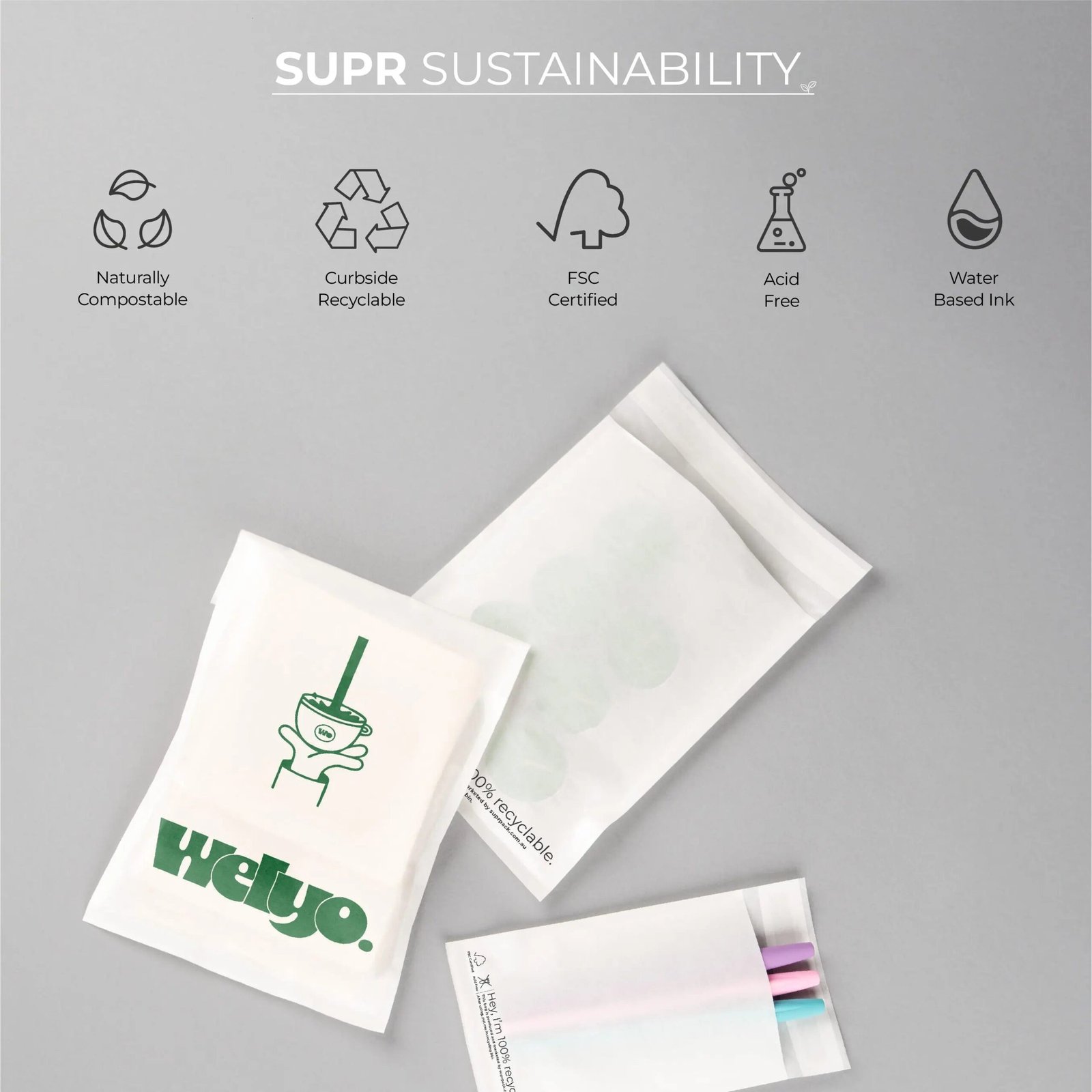
A flat bag dimension is not the same as usable internal space. Product depth consumes width and length; seams, flap folds and closure zones consume additional room. A thick knit item can fit on paper and still strain the side seams. A rigid card can catch on a narrow opening. Measure the product in its packed state, including tissue, cards or inserts that will travel inside the bag.
Use this practical sizing sequence:
- Measure the maximum packed width, height and depth at several points.
- Add every component that will go inside, including an insert or protective wrap.
- Confirm the supplier’s stated dimensions are internal or external.
- Identify the seal, flap and seam allowances on the dieline.
- Fill and close a physical sample, then handle it as fulfillment staff will.
If you need a faster starting point, compare the available sizes on Stowliva’s glassine bags for product packaging, but treat the size list as a shortlist—not as a substitute for sampling.
Mistake 4: forgetting that the closure changes usable height
A self-seal flap, fold-over top or sticker closure occupies space. Artwork placed too close to the fold may disappear, and a product packed to the very top can prevent a clean seal. Ask for the bag drawing with seal lines and printable areas marked. If the bag will be reopened, confirm whether the closure is designed for one-time sealing or repeated use.
Lay the filled sample beside the rest of the unboxing system. A bag that works alone may conflict with a custom tissue paper layer, an insert or the depth of the shipping box. Thinking in complete layers produces a more reliable packout.
Mistake 5: ordering a size and quantity before running a packing trial
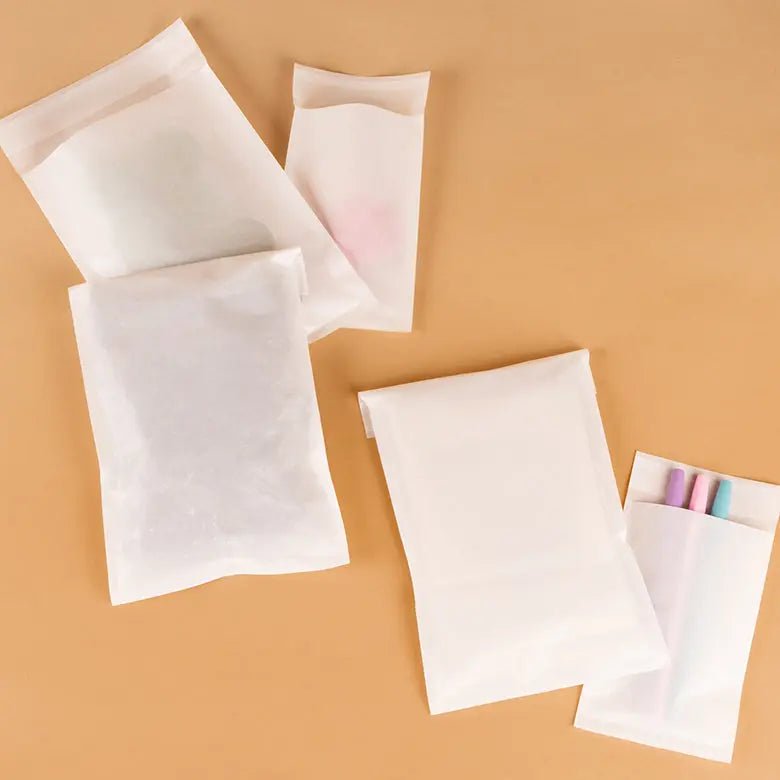
A digital mockup cannot show how quickly the bag loads, whether the product snags, or whether staff can seal it consistently. Build a short trial using the real product and a representative workflow. Record packing time, closure quality, scuffing and damaged units. If multiple SKUs share one bag, test the largest, smallest and most awkward item rather than the easiest one.
Quantity should follow the tested specification. Confirm whether a quote is for stock or custom production, what constitutes a color or size change, and how overrun or underrun is handled. Stowliva’s broader packaging product catalogue can help teams compare adjacent formats before they lock in one construction.
Mistake 6: making unqualified recyclable, biodegradable or compostable claims
Paper-based does not automatically mean every finished package is accepted everywhere. The US Federal Trade Commission’s Green Guides explain that environmental claims need a reasonable basis and that qualifications must be clear. Its plain-language environmental claims summary also shows why broad claims can mislead when access or conditions are limited.
Local acceptance matters. The US EPA advises people to check local rules in its guide to recycling common materials, and its work on standardized recycling terms reflects how inconsistent collection language can be. If you use an FSC label or claim, verify that the supply chain and trademark use meet FSC chain-of-custody requirements. Do not infer certification from appearance.
Mistake 7: approving print color only on a screen
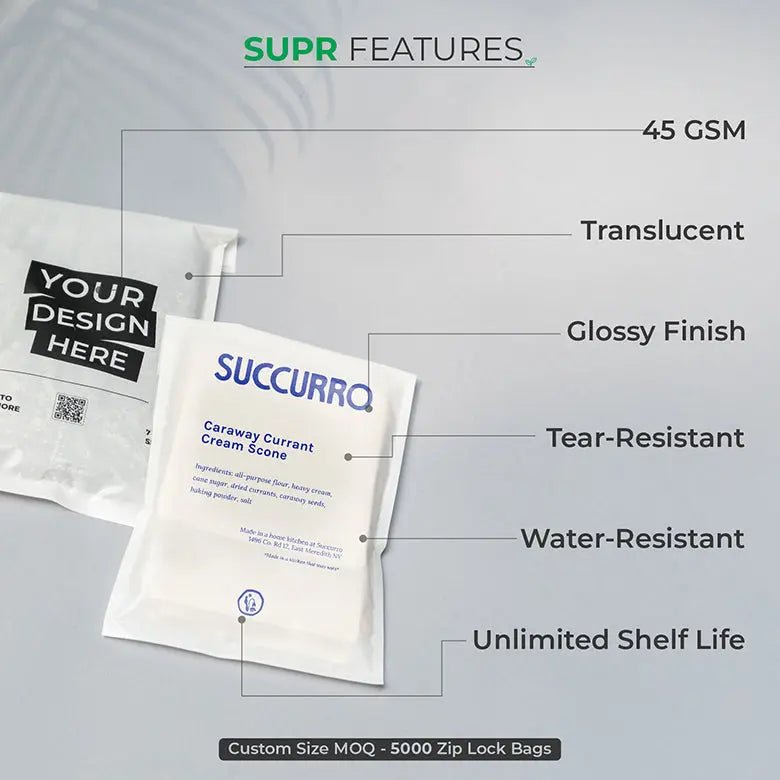
Glassine’s translucence and gloss affect perceived color. The product behind the bag, the light source and the whiteness of the paper can all change the result. A screen proof is useful for spelling, layout and repeat position, but it is not a physical color standard. Provide a recognized target when brand color matters and approve a printed sample on the chosen material.
Keep fine type and line work realistic. A bold mark often reads better on a translucent substrate than a complex lockup. If packaging also uses printed hang tags or packaging inserts, compare physical samples together so the system feels intentional rather than merely color-matched on screen.
Mistake 8: skipping a filled sample and incoming batch check
A physical sample answers the questions a PDF cannot: Does the bag open cleanly? Does the flap align? Is the product visible in the intended way? Does the print remain legible over the contents? After production, compare incoming goods with the approved sample and check dimensions, print position, closure, seams, odor, contamination and visible defects across more than one carton.
Document acceptance criteria before the order. That gives purchasing, production and fulfillment the same reference and makes a corrective conversation more objective. For a new packaging system, Stowliva’s custom packaging service can help translate a packed product and artwork into a sample-ready brief.
Glassine bag specification checklist
- Use: product type, direct contact, storage conditions and expected handling.
- Fit: packed width, height and depth; opening; flap; seam and closure allowance.
- Material: composition, basis weight, coating and evidence for required barrier claims.
- Print: vector artwork, printable area, ink, color reference and physical proof.
- Claims: exact documentation, target market and local disposal wording.
- Quality: approved filled sample and incoming inspection criteria.
Frequently asked questions
Are glassine bags eco friendly?
They can support a lower-plastic packaging direction in some applications, but “eco friendly” is too broad to stand alone. Evaluate the complete bag, coatings, inks, closures, sourcing evidence, product protection and local end-of-life route.
Are glassine bags recyclable?
Acceptance varies by local program and by the finished package. Ask the supplier for composition details, then tell customers to follow local guidance rather than promising universal curbside acceptance.
Can glassine bags be used for food?
Only when the exact material and construction are supported for the intended food, contact type, temperature and duration. Request relevant declarations and confirm the regulatory context for the destination market.
How should I choose a glassine bag size?
Measure the product in its packed state, allow for depth, and subtract the closure and seam zones from usable dimensions. Approve a filled physical sample before scaling the order.
Make the next sample answer the right questions
The best glassine bag is not the one with the most attractive flat photo. It is the one that fits the packed product, closes cleanly, prints legibly and supports only the claims your evidence can carry. Prepare the checklist above, select two plausible sizes and request a sample and quote before committing to volume.
Primary references
This guide was reviewed against current US federal guidance and standards pages linked above. It is general packaging guidance, not legal or food-safety advice; requirements depend on the product and market.
Editorial note: The five images are existing Stowliva catalogue photographs of real products, not AI-generated artwork. Product specifications and claims should be confirmed for each order.