Apparel brand fulfillment guide
Clothing Packaging: Mailer or Box? A Practical Brand Guide
Start with the folded order, then choose the mailer or box that protects the garment and works at your packing station.
Choose clothing packaging by the finished folded order: a mailer suits soft, flexible garments; a box suits orders that need support, protected details or a gift presentation. Measure the packed fold, leave a flat label area, and approve the closure and return process before printing. The useful question is which format protects your actual order at a workable delivered cost.

Should your clothing packaging use a mailer or a box?
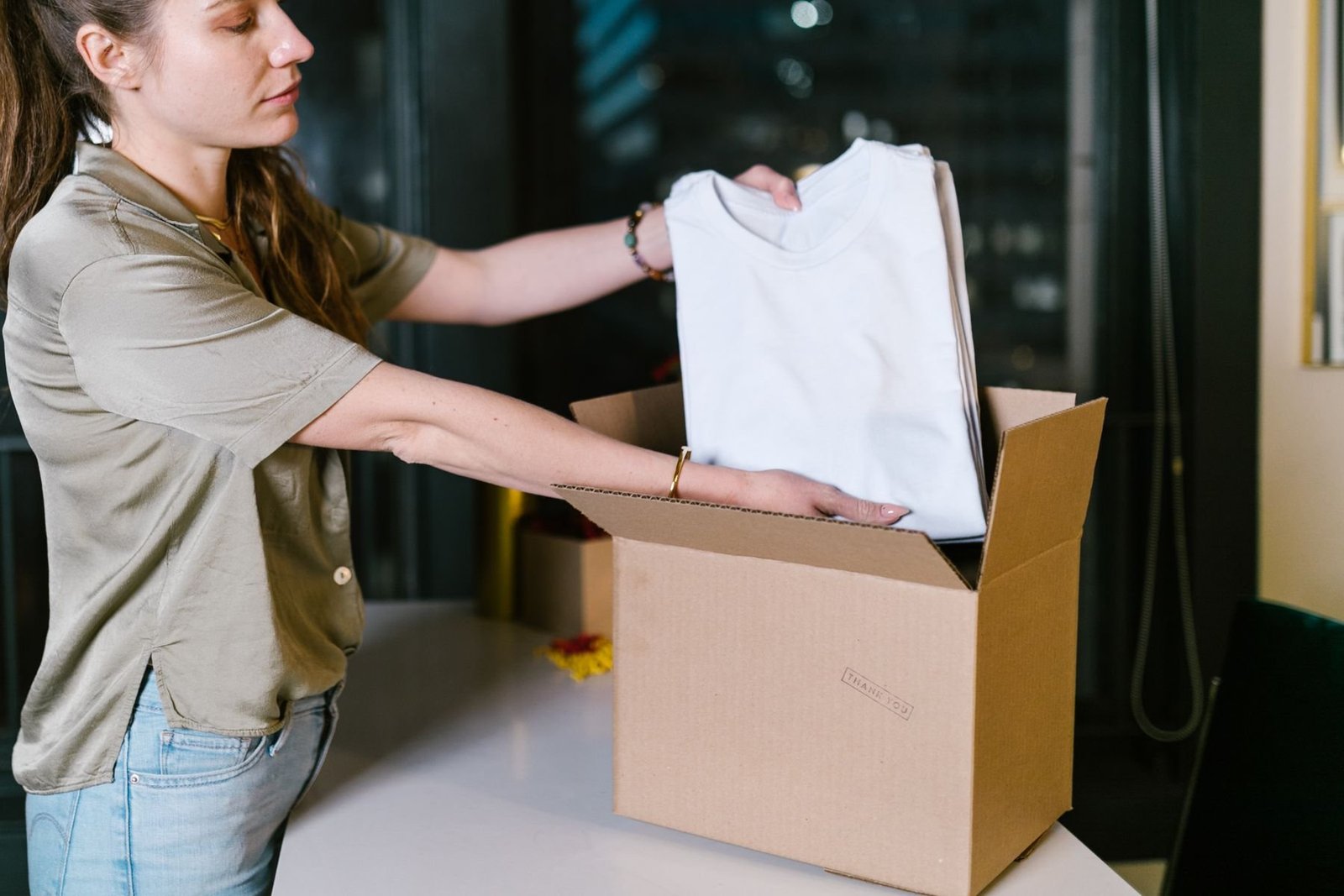
Use a mailer for flexible garments that can safely compress without damage, such as tees, leggings, simple knits, socks, or single lightweight items. Use a box for garments with shape, delicate finishes, premium gifting expectations, multiple items that stack unevenly, or details that should not be crushed. DHL’s clothing shipping guidance emphasizes preparing garments carefully, choosing suitable outer packaging, and including a spare label inside the package in case the outside label is damaged or detached. Source: DHL guide on how to ship clothes.
For small brands, the mistake is often choosing by “what looks best” before testing what actually ships best. Packaging bags for clothing offer a flexible format with little structural support. Boxes can provide shape control and presentation space, but require a comparison of the actual board, assembly, storage and freight costs. Test the chosen construction with the filled order.
Mailer vs box comparison
| Decision | Flexible mailer | Box |
|---|---|---|
| Useful starting point | Soft, compressible garments with a regular folded shape | Structured pieces, pressure-sensitive details or uneven bundles |
| Fit check | Usable space after folds, seams and closure allowance | Internal cavity after board and any inserts are included |
| Moisture | Verify the exact film or paper, seams and closure | Assess board, seams and any inner moisture-protection layer |
| Label | Flat area after filling; no label over a stressed fold | Clear panel that avoids opening seams |
| Returns | Approve the actual opening and resealing feature | Check that opening preserves the structure and reclosure works |
| Cost | Compare packed size, materials, labor and return handling | Include assembly, storage, outer volume and protection needs |
| Evidence | Filled-order sample and relevant performance checks | Filled-order sample and relevant performance checks |
For a flexible outer pack, evaluate custom poly mailers by usable space, opacity, seam construction, closure and the intended handling conditions. If you are considering a paper format, compare custom kraft paper mailers using the same filled order and exposure checks.
For a structured outer pack, use the custom mailer box brief to confirm internal dimensions, board, closure and print. A box needs enough structure for the packed order, and its performance still depends on the selected construction.
Start with the finished folded garment

Measure the garment after it is folded exactly as your packing team will ship it. Do not measure the flat pattern, the size chart, or the garment on a hanger. Your packaging size should be based on the finished folded length, width, and height, including tissue, belly band, sticker, card, or inner bag if those items are always part of the order.
A practical measuring process looks like this:
- Fold each core garment size using your real packing method.
- Measure the folded item without pressing it unnaturally flat.
- Add any tissue, card, or protective sleeve and measure again.
- Test the thickest common order, not only the neatest single item.
- Close the mailer or box and check whether the seal, corners, and label area still sit flat.
This matters because the right clothing packaging is not just “big enough.” A mailer that is too tight can stress the adhesive strip and wrinkle the product. A box that is too large can let the garment slide, which may damage folds, embellishments, or presentation.
Garment type should drive the outer format
Basic tees, tanks, activewear, and soft knits usually suit mailers because the garment itself provides flexibility. Denim, jackets, structured tops, hats, embellished pieces, bridal items, and premium bundles often suit boxes because they need more shape control. If your brand sells both basics and delicate pieces, one universal package may create waste, poor fit, or preventable damage.
Think in order families rather than individual SKUs. For example:
- Single basic tee: slim mailer, light tissue, clear label zone.
- Two folded sweatshirts: larger mailer only if the seal closes cleanly; otherwise a box may protect the order shape better.
- Embroidered cardigan: tissue barrier, no hard pressure on stitches, likely box.
- Gift bundle with socks, tee, and accessory: box with controlled presentation and less shifting.
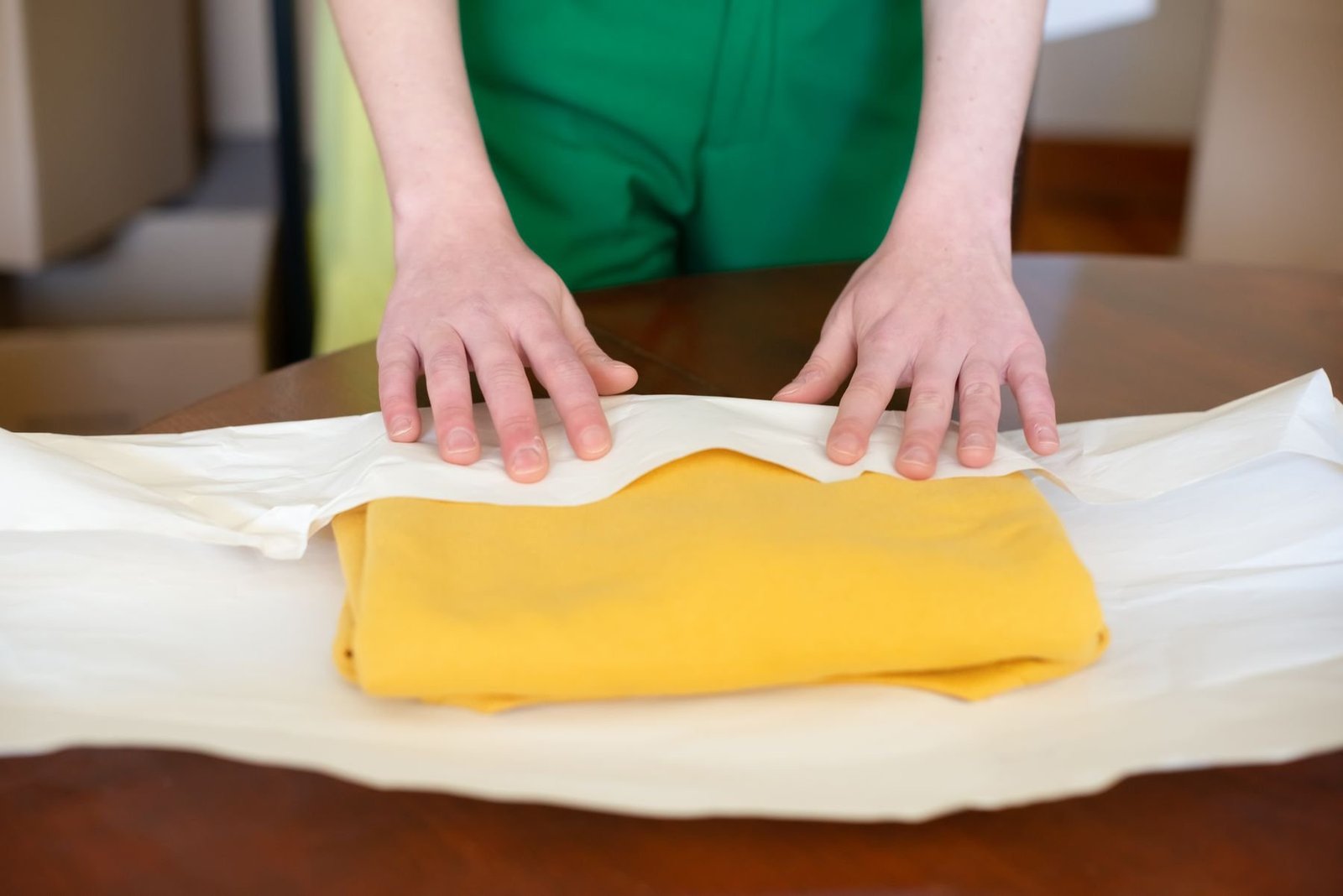
For inner presentation, custom pattern tissue paper can add a branded wrap. Test the finished print against the garment under your packing conditions. Tissue provides separation and presentation; it does not establish water resistance or crush protection.
Protect embellishments and prevent dye transfer
Embellishments change the packaging decision. Sequins, beads, rhinestones, embroidery, appliqué, metal hardware, puff print, foil print, and raised screen print can catch, rub, dent, or imprint onto nearby fabric. A flexible mailer may still work, but only if the decorated area is buffered and cannot grind against another surface.
Use a clean barrier between dark dyes, strong prints, trims, and lighter garments. Tissue, glassine-style sleeves, or appropriate inner bags can reduce direct contact, but test them under pressure and movement. Avoid assuming that “soft clothing” is automatically low risk; dark denim against a white tee, a metal zipper against satin, or a raised logo against a folded panel can create problems.
As an initial screening check, pack the garment and inspect it after controlled pressure, movement and a recorded holding period representative of your process. Look for dye marks, snag points and crushed decoration. Record the conditions so comparisons are repeatable. A quick desk check does not establish transport performance, waterproofness or long-term colorfastness.
Moisture control is part of parcel design
Parcel moisture is not only about rain. Packages may face damp loading docks, wet porches, condensation, or humidity swings. A poly mailer can resist light external moisture when sealed properly, while a paper mailer or box may need stronger closure choices, protected seams, or an inner wrap depending on the route.
Do not solve moisture by trapping garments in packaging that creates new problems. If apparel is packed while warm, damp, freshly steamed, or not fully settled after printing, a sealed package can hold that moisture close to the fabric. Build a packing rule: garments should be clean, dry, cooled, and ready before they enter any final packaging bags for clothing.
Material names do not settle disposal questions. How2Recycle’s FAQ advises following local collection guidance. Check the finished construction, including windows, coatings and labels, against the actual collection route. Separately, FTC environmental claims guidance discourages unsupported broad claims such as “eco-friendly.” State a documented, specific attribute instead.
Labels, closures, and returns need space
A beautiful design can fail if the shipping label wrinkles over an edge or the closure lands on a bulky fold. Before approving any clothing packaging, mark the exact label zone, barcode zone, adhesive strip, tear strip, and return seal. Then pack the largest realistic order and confirm everything still lies flat.
If customers may return an item, test opening and resealing with the same package. A second adhesive strip or suitable reclosure can help when it is part of the approved construction; do not assume every mailer includes one. Leave space for a replacement label and give clear instructions about which label to cover.
If your box or mailer includes full-bleed artwork, ask your designer to prepare production files correctly. Adobe’s print bleed guidance explains that artwork intended to print to the edge should extend into the bleed area beyond the final trim size. Source: Adobe’s print bleed guide.
Dimensional weight affects the real cost
The cheapest unit price is not always the cheapest completed order. FedEx explains dimensional weight as a pricing method based on the amount of space a package occupies, which is why an oversized box can cost more even when the garment is light. Source: FedEx dimensional weight explanation.
Calculate cost per completed order, not packaging cost alone. Include the outer mailer or box, inner wrap, stickers, labels, tape, inserts, void fill, labor time, storage space, returns handling, replacement risk, and shipping impact. A box may be worth it for premium or fragile garments. A mailer may be smarter for simple basics if it protects the item and keeps the parcel compact.
Compare parcel volume before requesting rates. As an illustrative calculation, a closed package measuring 32 × 24 × 8 cm occupies 6,144 cm³, while 32 × 24 × 12 cm occupies 9,216 cm³—50% more volume. These are assumed example sizes, not product specifications or a predicted freight saving. A carrier quote determines the actual charge.
Approve samples like a fulfillment team
A realistic sample approval process should include blank samples, printed samples when available, and packed samples using real garments. Review internal size, external size, closure performance, print placement, label fit, barcode readability, tissue fit, and the opening experience. FSC explains that FSC 100%, FSC Mix, and FSC Recycled labels mean different things, so if you plan to use FSC-related language, confirm the exact claim for the chosen material and production route. Source: FSC label meanings.
Use this approval checklist before ordering custom clothing bags, custom packaging bags for clothing, or boxes:
- The finished folded garment fits without force.
- The closure seals flat and stays clear of bulky folds.
- The shipping label fits on one smooth surface.
- Embellishments are buffered from pressure and rubbing.
- Dark and light garments are separated when needed.
- The package can handle a return without looking destroyed.
- Environmental claims match the final material, coating, adhesive, and local disposal reality.
- The completed order cost still makes sense.
Practical scenarios for small apparel brands
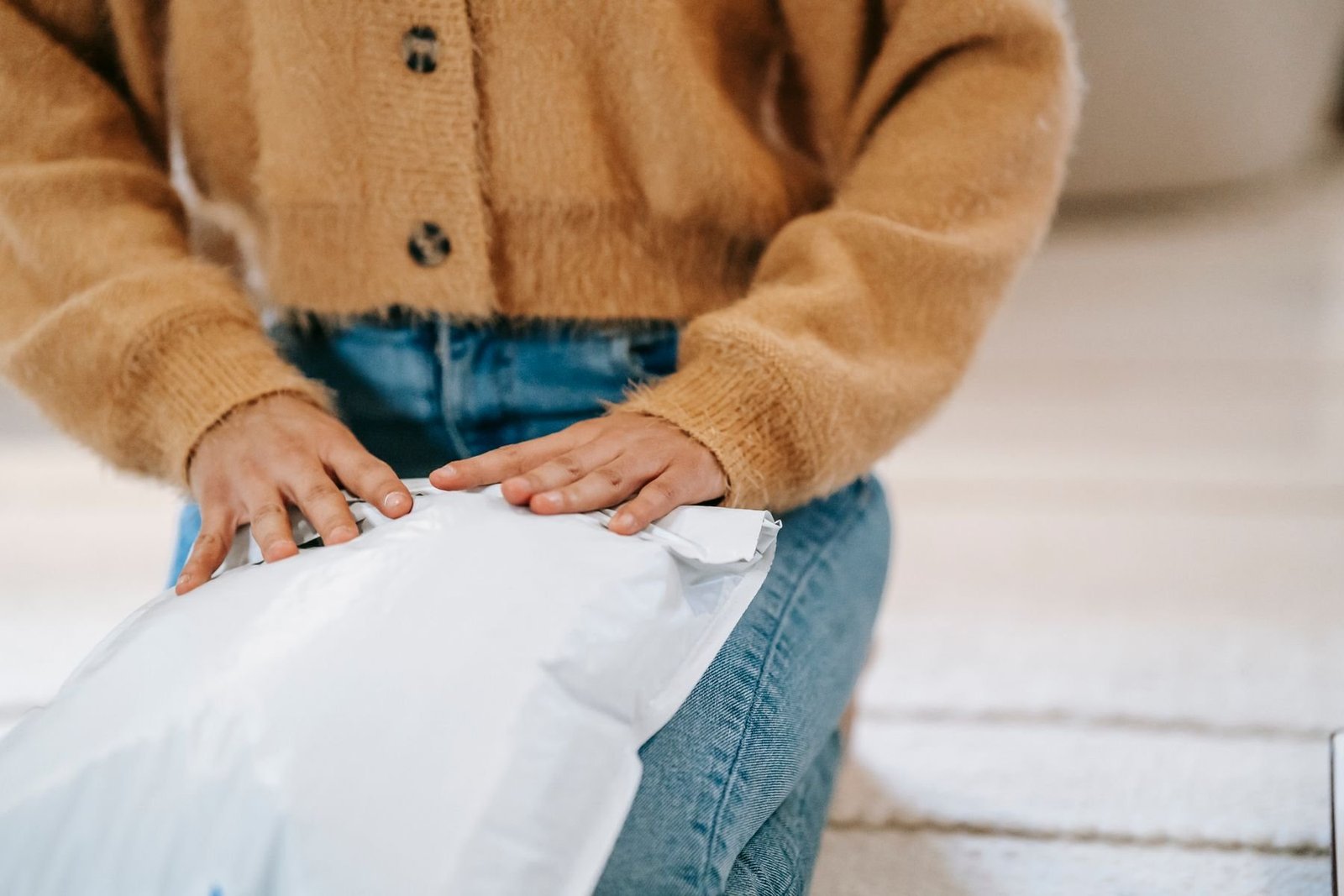
Scenario 1: A basics brand shipping single tees. A slim mailer is usually the practical starting point. The garment folds flat, the order shape is predictable, and the brand can use tissue or a card for presentation. The key checks are opacity, seal strength, label fit, and whether the customer can return the item cleanly.
Scenario 2: A boutique shipping embellished knitwear. A box is likely safer because the garment has texture, value, and pressure-sensitive details. Add tissue between surfaces, avoid tight folds over raised areas, and test whether movement causes snagging or imprinting. The brand may spend more per package but reduce presentation risk.
Scenario 3: A streetwear brand shipping mixed drops. Use more than one format. A tee can ship in a mailer, while a hoodie-and-accessory bundle may need a box. This keeps clothing packaging aligned with the order instead of forcing every shipment into the same compromise.
Choose a small packaging range your team can repeat
A practical starting point is a format for single basics, another for thicker bundles, and a protective option for pressure-sensitive garments. Validate those families against your real order mix before ordering stock. Keep a reference packed sample, fold method and photo at the packing station so the same product leaves in the same condition.
If a reusable inner presentation bag fits the product, compare custom drawstring bags. Check fabric contact, usable size and packing time; an inner fabric bag still needs an outer shipping package. For related product identification decisions, see the clothing labels buying guide.
Before asking for a quote: record the folded-order dimensions and weight, garment photos, quantity per design, chosen outer format, print, closure, expected route and return needs. Attach photos of both the neatest and thickest common orders. Send the apparel packaging brief to Stowliva so the construction and sample requirements can be confirmed together.
Clothing Packaging: frequently asked questions
Are mailers or boxes better for clothing packaging?
Mailers can suit soft, flexible garments and compact orders. Boxes can suit structured garments, pressure-sensitive decoration and uneven bundles. Choose by the finished folded order and verify closure, protection, label fit and returns.
How do I measure clothing for packaging?
Fold the garment using the intended packing method, add the normal tissue or inner wrap, and measure the finished length, width and thickness without forcing it flat. Check the smallest and thickest common orders in the proposed pack.
Is tissue paper enough to protect clothing in transit?
Tissue can provide presentation and surface separation, but it is not a substitute for an appropriate outer shipping package. Test the finished tissue print against the garment and assess moisture, rubbing and pressure risks.
Can a customer recycle every paper or compostable mailer?
No. The complete construction and local collection system determine the disposal route. Coatings, windows, adhesives and labels can affect acceptance. Confirm the supported instructions for the selected packaging and market.
About this guide: Prepared by Stowliva Editorial using the linked references, reviewed October 15, 2026. Reference photographs show independent applications. Confirm specifications for the selected order.