Bakery packaging buyer guide
Custom Bakery Boxes: 7 Ways to Avoid Crushed Pastries
Measure the finished pastry, protect the toppings and approve the complete pack before printing.
A beautiful pastry can lose its appeal in the last few minutes before handover: a lid touches the frosting, a cupcake tips sideways, or butter leaves a dark patch on the base. Choosing custom bakery boxes starts with the finished food and its journey. The logo comes after the fit, the food-contact requirements and the way the order will be carried.
Quick answer: Measure your largest finished pastry with its liner or tray. Choose a box with enough usable space to close without touching the decoration. Confirm the materials for the intended food-contact conditions, then test a loaded sample through your pickup or delivery routine. A retail bakery carton alone does not establish suitability for refrigerated shipping.
1. Measure the pastry after decorating, not before baking
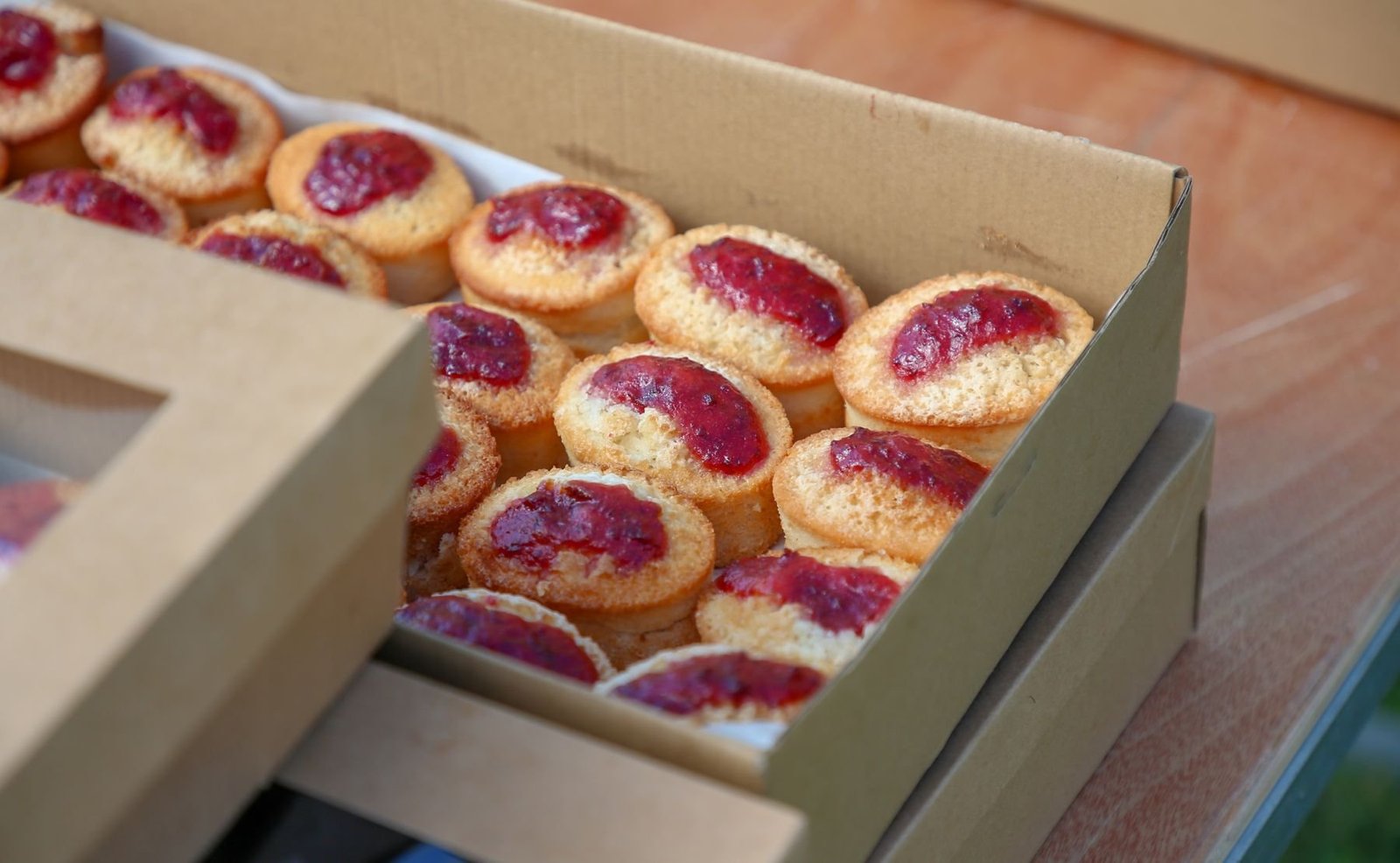
Take measurements from sale-ready products. Include the cupcake liner, piped cream, fruit, chocolate decorations, cake board or individual wrapper. Check more than one batch because handmade products vary. A drawing based on the average item can leave the tallest or widest pastry squeezed against the box.
Ask the supplier to label the usable internal length, width and height. External dimensions and flat dieline dimensions answer different questions. Folded corners, tabs, a raised base and an insert can all reduce usable space. For a window box, check the clearance beneath the window as well as beneath the surrounding board.
Worked layout example: Four cupcakes, each 70 mm across at the widest point, arranged two by two occupy 140 × 140 mm before any gaps or wall clearance. If your prototype allows a 10 mm gap between cupcakes and 5 mm on each outer side, the trial footprint is 160 × 160 mm. These allowances are an example to test, not a standard. The tallest topping plus the tray height determines the trial internal height.
Make a full-size paper layout before ordering printed samples. Position real products on it, place the proposed insert over them, and try loading and removal. For a mixed box, repeat the exercise with every combination you actually sell. Start your specification with Stowliva’s custom bakery box options; confirm the finished construction rather than selecting by a catalogue photograph.
2. Match the box structure to the product
A folding carton, window carton and compartmented pack solve different presentation problems. The right choice depends on what needs restraint, how much visibility you want and whether the box must stack. A decorative window can show the product clearly, but its position and the remaining board need to work with the closure and handling routine.
| Starting format | Useful application | Sample check that matters |
|---|---|---|
| Closed folding carton | Cookies, brownies or a mixed pastry order | Base support, closure fit and loading speed |
| Window carton | Decorated cupcakes or gift pastries | Decoration clearance, window attachment and stacking |
| Carton with fitted holder | Individual cupcakes that need to stay upright | Cavity fit, lifting access and movement in transit |
| Tray with cover or sleeve | A planned display or organised assortment | Retention, covered surfaces and handling before handover |
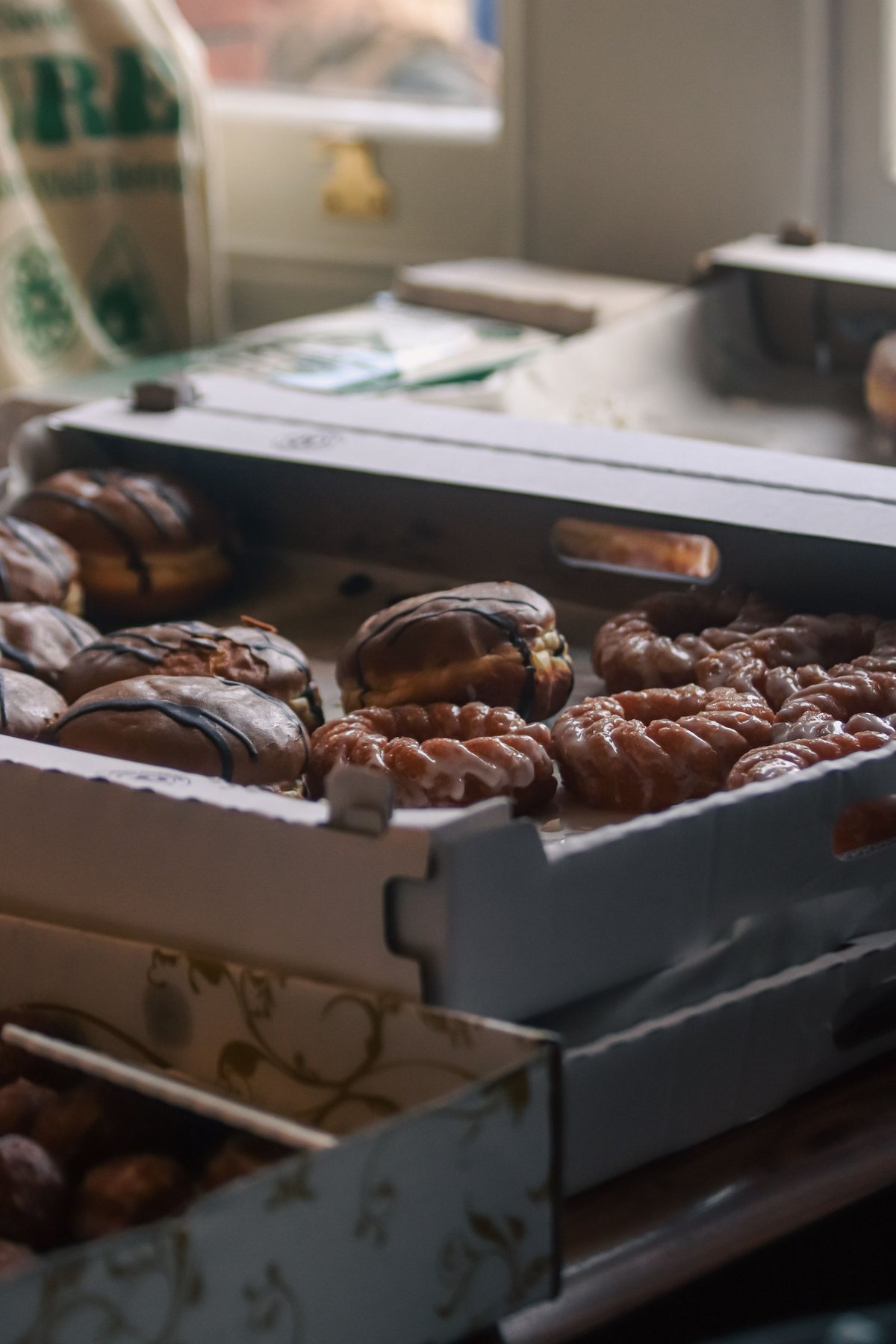
Compare donut boxes for glazed products, macaron boxes for delicate rows, and treat boxes for smaller gift assortments. A product name is a useful starting point, not proof that one format fits every recipe. Request a prototype with the actual contents.
3. Protect toppings and control movement
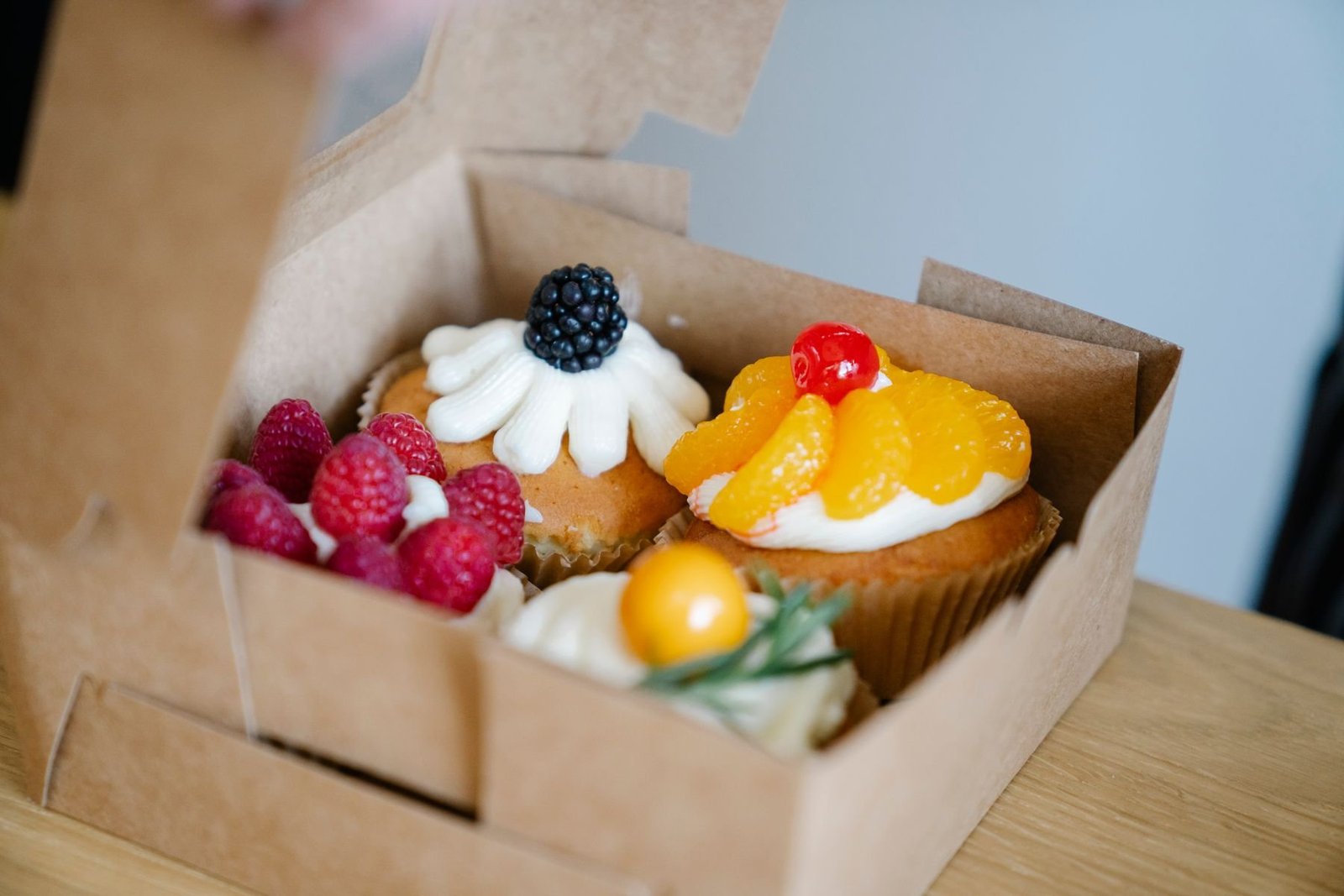
Choose the restraint around the part of the food that can safely be supported. For cupcakes, a holder may locate the liner or lower cake rather than pressing against icing. For macarons, a tray may separate pieces without scraping the shells. Ask whether the holder changes the usable base area or lifts the product closer to the lid.
Pack the sample as your team will pack an order. Carry it by the base, place it in the intended bag, lift it out and set it on a counter. Check whether the base bends and whether pieces slide into one another. If the pack is intended for a courier, assess the complete shipping system; a gentle hand-carry check does not simulate parcel handling.
Write clear acceptance criteria before reviewing the sample. Examples include no topping contact with the lid during the agreed routine, no product escaping its holder, and no closure opening during normal handover. Use photographs of the approved pack as a reference for future batches. Avoid vague instructions such as “make the insert tighter” without identifying the cavity and the product measurement.
4. Confirm food-contact suitability and grease behaviour
Identify every surface that can touch the food: base board, liner, tray, window, adhesive area and any printed surface. Tell the supplier the food type, contact time and temperature. A dry cookie and a buttery pastry present different conditions; a chilled dessert can introduce condensation. Do not assume that brown kraft appearance establishes suitability.
The FDA’s food-contact material guidance explains that the status of the finished article depends on its components and intended use. Ask for documentation tied to the selected materials and conditions, rather than accepting an unrelated certificate or a generic “food grade” sentence.
Run an appearance and handling check with the real recipe for the longest planned packing period. Look for grease marks, softened corners, unwanted odour, sticking and ink transfer. This practical check helps you compare designs; it does not replace the appropriate compliance assessment. If a liner or coating is proposed, include it in both the sample and the supplier documentation.
Keep general-purpose decorative wrapping separate from approved food-contact layers. A branded outer sleeve or sticker can communicate the bakery identity while a suitable liner handles direct contact. For the outer carton design, compare custom folding cartons and ask which specified materials are suitable for your intended application.
5. Separate counter pickup from chilled or parcel delivery
Write down the actual route: how long the order waits after packing, how it leaves the shop, what it travels inside, and how the customer receives it. A pack for a nearby pickup needs a different review from one travelling through a parcel network. Establish the storage and handling requirements of the food itself before choosing the delivery method.
USDA’s mail-order food safety guidance addresses the temperature condition of perishable food on arrival. Where refrigeration is required, the bakery box is only one part of the system. Insulation, refrigerant, transit time and receiving instructions need separate planning and validation for that product and route.
For parcel orders, assess the inner bakery carton together with cushioning and a protective outer box. ISTA’s packaging design and testing guidance stresses matching testing to the distribution environment. Ask the packaging specialist which procedure is appropriate; a small trial shipment is useful feedback, but it is not a certification.
Use shipping box options as the outer-pack starting point and read the mailer versus shipping box comparison before finalising the packout. Test opening after delivery too: a pastry that arrives intact should still be removable without damage.
6. Design artwork around the information customers need
Reserve space for the product identity, required ingredient and allergen information, storage instructions and any date or batch marking that applies to the way you sell. Decide which details belong on a permanent print and which need a variable label. Review the final wording for the destination market and sales format before approving artwork.
The FDA’s food-allergen overview identifies nine major allergens, including sesame. It is a useful reference for a US label review. Packaging design should leave enough readable space for the applicable information; this guide does not determine exemptions or replace review of a particular food label.
If the pack uses a retail barcode or QR code, locate it away from folds, closures and busy graphics. The GS1 retail 2D barcode guideline explains the importance of quiet zones and placement. Check the final printed code in its intended scanning environment. A successful scan from a screen does not approve the folded carton.
Place the logo on the supplier’s current dieline, use the requested colour workflow and approve actual-size text. Check artwork again when the box is closed, stacked and placed in a bag. The most useful bakery packaging design makes the product attractive while keeping the essential information easy to find.
7. Approve a complete sample and a comparable quote
Request a sample that includes the proposed board, window, liner, holder, closure and print. Record any difference between that sample and the intended production specification. A plain structural prototype can approve fit, but it cannot approve the final printed colour or a coating it does not contain.
Compare the cost of a complete usable pack: carton, holder, liner, label, assembly time, outer shipping materials and freight. Record quantities by design and size. An inexpensive carton that takes longer to assemble or needs an extra protective layer may change the total packing cost. Use your own timed trials and quotations rather than an assumed saving.
For material claims, distinguish sourcing evidence from disposal guidance. FSC explains its labels for forest-based products; approval for a particular box and use of a mark still need confirmation. The FTC Green Guides summary explains why broad environmental claims need evidence and qualification. The EPA’s recycling guidance also reminds customers to check local acceptance and food contamination.
- Food: finished dimensions, variation, toppings, contact conditions and required storage.
- Box: usable internal dimensions, structural drawing, window and closure.
- Inner layers: tray, liner or holder and their exact materials.
- Artwork: dieline, readable information, variable labels and code positions.
- Route: pickup, local delivery or a separately validated parcel and temperature-control system.
- Approval: loading, carrying, stacking, opening and appearance criteria.
- Order: quantities, destination, required date and a retained approved sample.
Send this brief through Stowliva’s custom packaging enquiry. Ask which box construction and food-contact documents can be supplied for your use. The goal is a repeatable pack that fits the pastry and the route, with the print and specification approved together.
Custom Bakery Boxes: frequently asked questions
What size should custom bakery boxes be?
Measure the largest sale-ready pastry with its toppings, liner and tray. Specify usable internal dimensions and test the planned spacing and lid clearance on a physical sample; there is no universal allowance.
Are bakery boxes suitable for direct food contact?
Suitability depends on the selected materials and intended conditions of use. Confirm the food type, temperature and contact time with the supplier and request documentation for the board, liner, tray and other relevant components.
Can a bakery box ship refrigerated desserts by itself?
A retail bakery carton alone does not establish suitability for refrigerated shipping. Where refrigeration is required, validate the complete temperature-control and transport system for the actual food and delivery route.
Should cupcake boxes have inserts?
An insert can help locate cupcake liners and keep products apart, but its cavity fit and lid clearance must be tested with real cupcakes. Approve retention, loading and removal together.
About this guide: Prepared by Stowliva Editorial using the linked technical references, reviewed October 12, 2026. Examples are illustrative. Confirm final specifications and claims for the selected order.