
Packaging Compliance
Designing for Recyclability
Design backwards from collection and processing. The right base material helps, but coatings, labels, closures and format can decide whether the finished package is recoverable.
Explore the guide ↓
Recycling design is about the whole item reaching a workable next use. Small construction details can change a large material’s route.
- Choose the recovery route before adding finishes.
- Assess labels, barriers and closures with the main material.
- Separate technical compatibility from permission to print a claim.
On this page
Start with the route, then design the package around itFor paper: give the fiber a chance to be recoveredFor flexible films: keep the polymer stream understandableLabels and decoration are part of the engineeringMake the required action easy to understand and performCompatibility, performance and permission are separate approvals01 / 06
Start with the route, then design the package around it
Choose the intended market and understand the relevant collection and processing system. A paper mill, a PE-film processor and a rigid-container recycler need different inputs. Designing an item without that destination can produce a theoretically processable material that customers cannot actually recover.
Work backwards from the receiving process: what construction is accepted, how is it identified, which additions interfere, and what preparation is realistic? This connects design choices to a system rather than to an abstract recyclable-material list.

- 1Identify the destination
- 2Understand the accepted construction
- 3Design the base and additions
- 4Make separation practical
- 5Validate the finished item
02 / 06
For paper: give the fiber a chance to be recovered
Paper recycling separates usable fiber from unsuitable additions through the applicable pulping and cleaning process. A permanent laminate, barrier, wet-strength treatment or bonded window can change how a paper item behaves. Not all coatings have the same effect, so ‘coated’ or ‘water-based’ alone is not a complete assessment.
The design question is whether a finish is necessary and compatible with the intended route. A card used briefly for information has a different need from a package protecting moisture-sensitive goods. Avoid adding a permanent mixed-material finish solely because it appeared on the first visual reference.
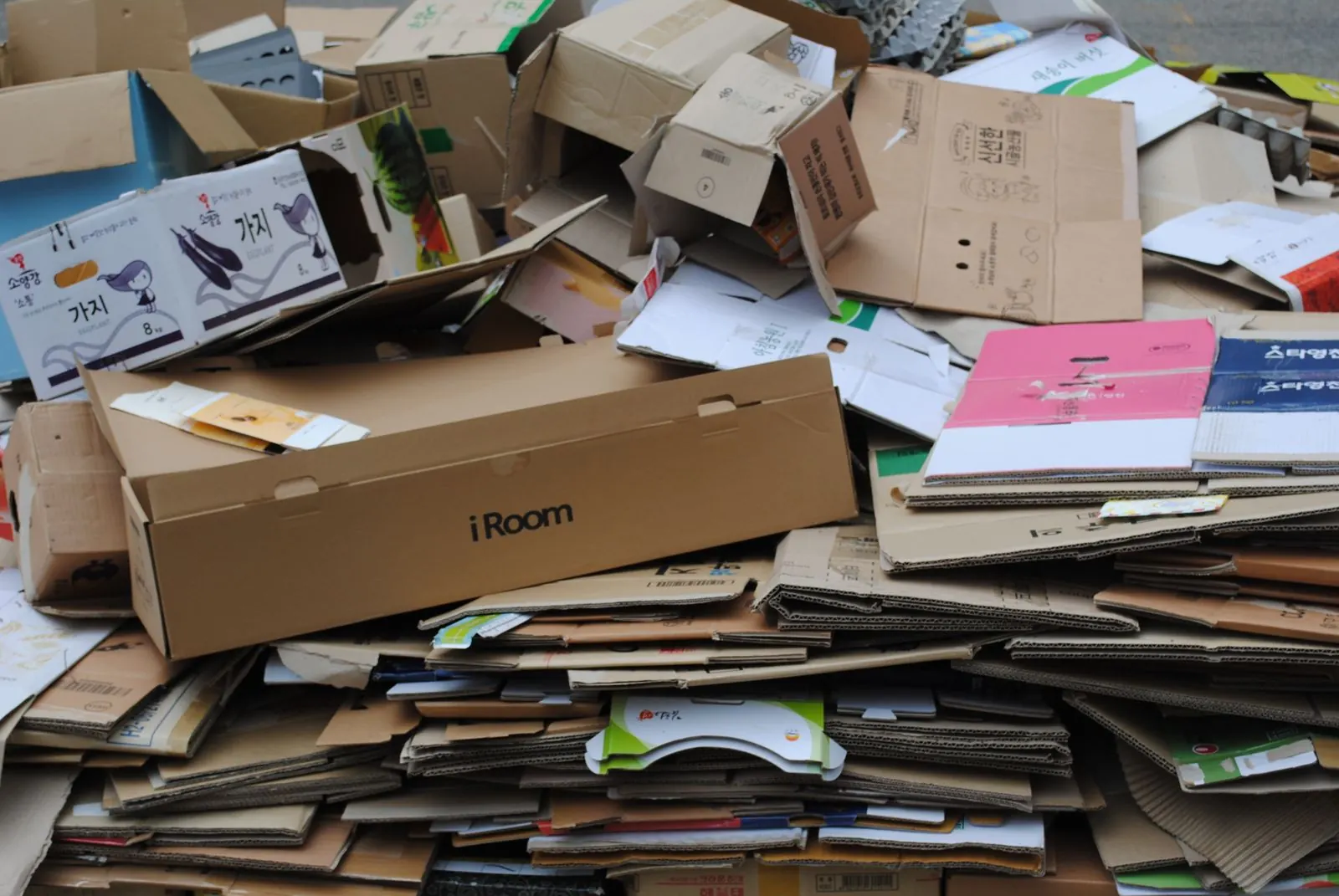
A hang tag and a food pouch need different barriers
An unlaminated card may perform its information job. A pouch containing an oily product needs a real barrier assessment. Removing the coating from both items without considering the application would be as unhelpful as adding it to both.
03 / 06
For flexible films: keep the polymer stream understandable
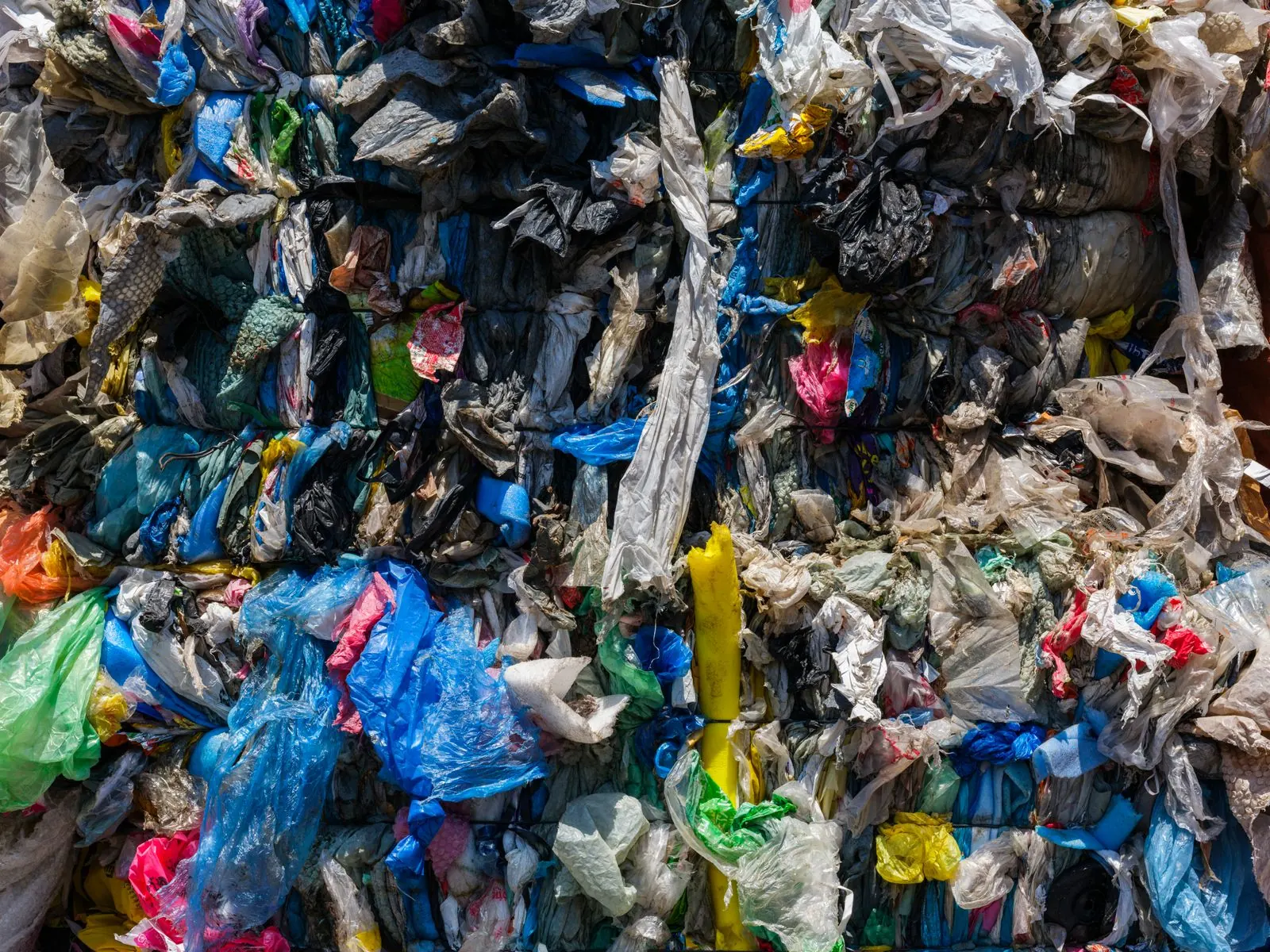
Film processors need suitable feedstocks, not every item that looks like a bag. A PE structure with compatible additions presents a different challenge from a bonded PE/PET/metalized laminate. Closures, inks, labels and adhesives still need to be assessed with the structure.
A mono-material ambition can simplify separation, but the claim should account for the whole construction. It also leaves collection access unresolved. A technically compatible film is useful only if the customer or business can reach the correct accepting route.
04 / 06
Labels and decoration are part of the engineering
A large sleeve can hide the underlying container from optical sorting. A bonded label or adhesive can influence reprocessing. Dark colors and heavy print can affect the value or detectability of some material streams. These effects depend on the substrate and equipment, so one universal rule for every label would be misleading.
Design the branding and functional additions with the substrate. A smaller label, removable band or different decoration route may preserve the look while reducing an obstacle. The meaningful result is compatibility of the printed item, rather than a claim about the ink or label considered by itself.

A small accessory can change a large item
A textile handle attached to a paper bag has a different route from the paper body. An easily removable handle can make separation more practical than a permanently bonded mixed-material assembly.
05 / 06
Make the required action easy to understand and perform
If a customer must separate a component, that action should be physically simple and clearly explained. An invisible bonded layer cannot be separated merely because the artwork says to do so. A useful instruction should match what a person can do at the point of disposal.
Naming the component also prevents whole-pack confusion. A carton’s instruction should not appear to cover a protective film, pouch and insert automatically. The appropriate geography belongs in the explanation when programs differ.
| Design detail | Reader’s practical question |
|---|---|
| Removable handle or window | Can I remove it easily, and where does each part go? |
| Film surrounding a carton | Does this need a separate collection route? |
| Several paper components | Does the instruction cover this grade and finish? |
| Reusable pouch | Should I keep it before disposing of the outer pack? |
06 / 06
Compatibility, performance and permission are separate approvals
A package must survive use as well as suit recovery. Test the selected construction with the product, including the seam, fold, barrier and decoration. Then connect the final specification to the recovery evidence. A material change late in production can alter the result.
A technical assessment does not automatically authorize a consumer-facing recycling claim. Marketing and labeling rules, including California’s evolving requirements and litigation status, need their own review. Keeping these approvals separate helps a brand avoid using a successful transit test as environmental evidence.
Official and first-party resources · reviewed October 7, 2026
Put the learning into your next pack.
Share your product, material questions and destination with Stowliva.