Packaging Education
Recyclable Packaging
Recyclability is a chain of practical steps: collection, sorting, a buyer for the material and a process that turns it into something useful.
Explore the guide ↓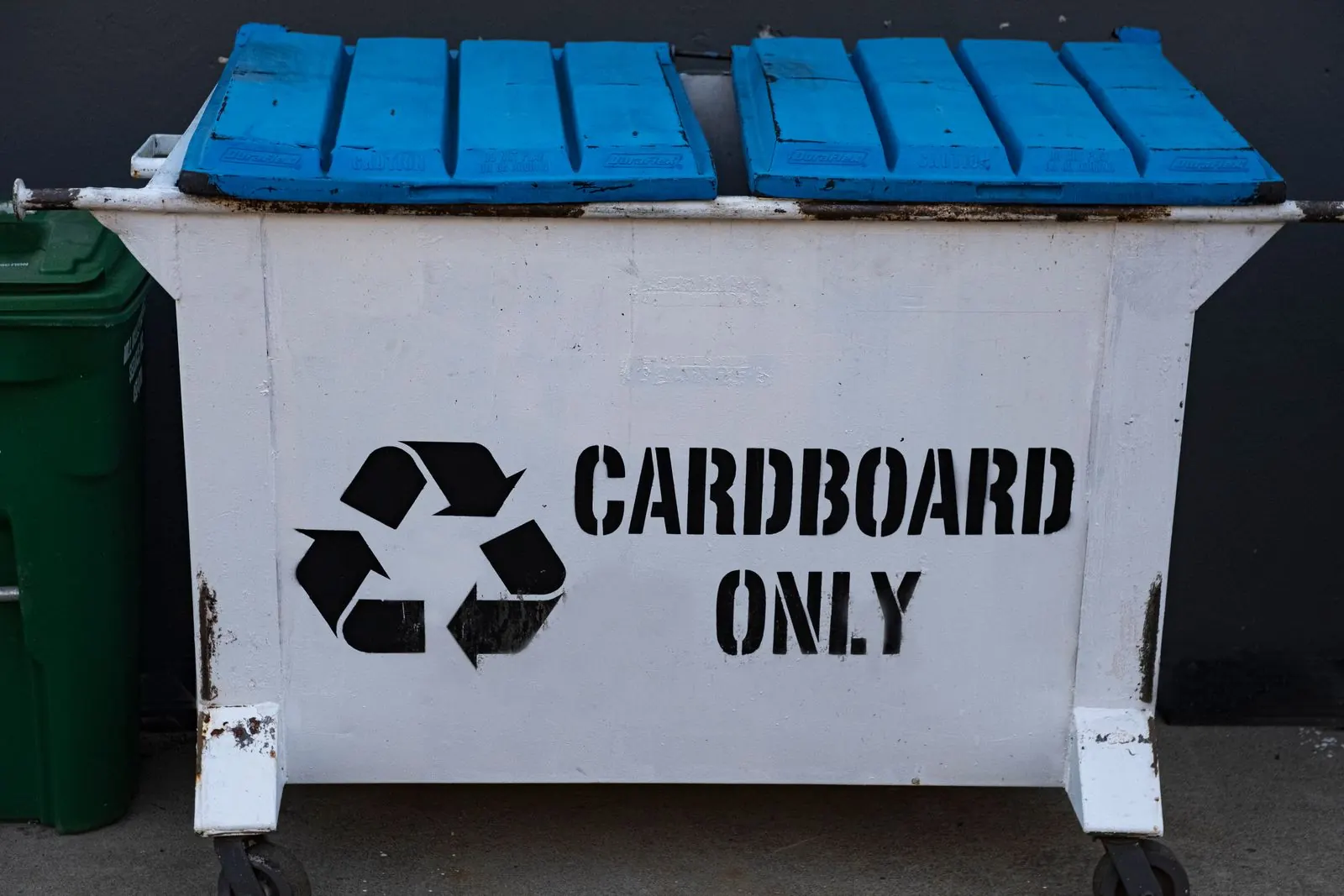
A package is not recovered merely because its base material can be melted or pulped. The complete item must reach a functioning route.
- A working route needs collection, sorting, a market and processing.
- A bottle’s recycling statistics do not describe a film bag.
- Give customers component-specific instructions.
On this page
Follow the package beyond the recycling binCollection access and recycling rate answer different questionsFlexible bags and rigid containers travel differentlyCompare materials by construction and routeGive one understandable instruction for each componentRecyclable inputs still benefit from recycled content01 / 06
Follow the package beyond the recycling bin
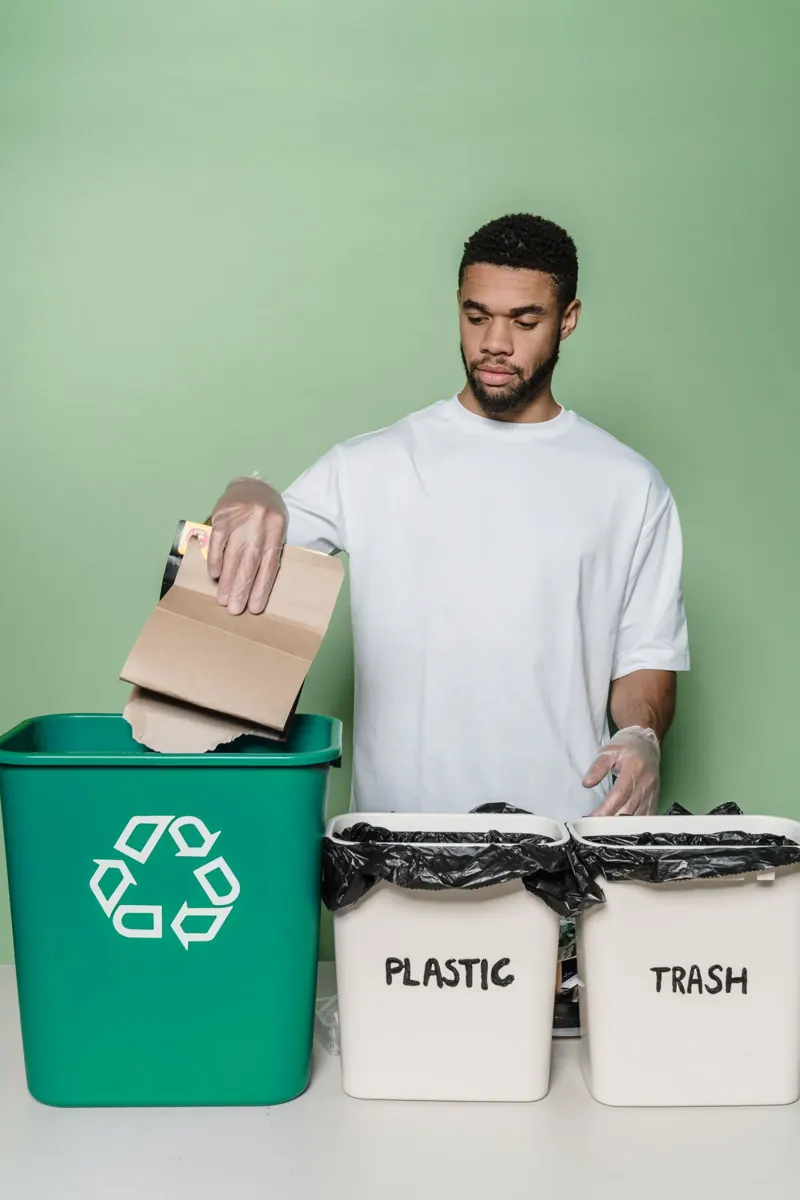
After collection, mixed recyclables reach a sorting system. The operator separates marketable material streams, which are sold to processors. Those processors clean or convert the material so a manufacturer can use it. A new product and a customer complete the journey.
A break at any step changes the outcome. An unaccepted item may not enter collection. A tiny component may be lost during sorting. A mixed-material laminate may be difficult to process. A clean material stream without a buyer can still struggle to find a useful destination. Recyclability is therefore a system property as well as a material property.
- 1Accepted collection
- 2Sorting by material and format
- 3Sale to a material buyer
- 4Reprocessing into usable input
- 5Manufacturing another product
02 / 06
Collection access and recycling rate answer different questions
Collection access asks how many people can use a relevant program. Recycling rate asks how much material was actually recovered out of a defined amount generated. A customer may have access and still put the item in the wrong bin. An accepted format can also be lost through contamination or sorting.
Read statistics with their material, place and year attached. A rate for all paper packaging is not a rate for a coated paper pouch. A rate for rigid bottles is not a rate for flexible film. Those distinctions help prevent a reassuring headline from becoming an inaccurate instruction.
03 / 06
Flexible bags and rigid containers travel differently
A lightweight film can wrap around sorting equipment designed for mixed rigid containers and paper. That is why ordinary curbside instructions frequently exclude bags even when the PE polymer has a separate recycling market. A clean film stream collected separately presents a different processing problem.
Program acceptance is specific. An eligible PE bag is different from a snack wrapper, a compostable film or a multi-polymer pouch. A resin symbol is useful identification, but it is not proof that the local operator accepts the finished construction.

Two clear bags can need opposite instructions
A suitable PE garment bag and a compostable bioplastic bag may look similar. The first might qualify for a particular film program; the second should not be added to that PE stream. Appearance is not a reliable sorting test.
04 / 06
Compare materials by construction and route
The table below is a starting map for common packaging formats, not a promise of acceptance in every community. Use it to understand why the full construction matters. A paper-based item with a permanent plastic layer should not automatically receive the instruction for an uncoated carton.
The next questions concern labels, adhesive, color, size and coatings. Their effect depends on the substrate and treatment process. ‘Mono-material’ can simplify the technical problem, but it does not establish collection access by itself.
| Construction | Likely route to investigate | Main obstacle | Design response |
|---|---|---|---|
| Corrugated carton | Local paper/cardboard collection | Food contamination or bonded nonfiber parts | Keep fiber accessible; remove unnecessary permanent additions |
| Mixed paper / card | Local accepted paper grades | Very small pieces, coatings or unsuitable grades | Check format and finish, not just paper content |
| Rigid PET container | Accepted container collection | Color, sleeves, labels and noncompatible additions | Assess the complete container construction |
| Rigid HDPE / PP | Accepted local container categories | Different local acceptance and closures | Confirm the actual material, format and locality |
| Flexible PE bag | Verified separate film collection | Film in curbside equipment; dirt or mixed polymers | Use an eligible construction and program-specific instruction |
| Flexible PP or multilayer pouch | Specialist route where established | Multiple polymers/barriers and limited collection | Do not inherit a PE-film or bottle instruction |
| Glass packaging | Accepted glass collection | Collection differences, breakage and noncontainer glass | Use the actual local container-glass instruction |
| Metal container | Accepted metal-container stream | Composite additions and local format limits | Assess the entire format and necessary separation |
| Compostable film | Accepting compost route for the verified item | Confusion with conventional plastic streams | Keep it out of plastic recycling; verify the compost destination |
| Expanded polystyrene | Specific accepting program where available | Low bulk density and limited collection | Do not assume ordinary curbside acceptance |
05 / 06
Give one understandable instruction for each component
A customer holding a carton with tissue and a drawstring pouch needs to know which part an instruction describes. The carton may have a verified paper route; the pouch may be intended for reuse; a protective film may need separate collection. One recycling symbol beside the brand logo can blur those differences.
Useful labeling names the piece and the action. Necessary separation should be practical, such as removing a reusable textile pouch before handling the outer packaging. If a route is not established, clear disposal information is preferable to asking customers to guess.
06 / 06
Recyclable inputs still benefit from recycled content
Designing an item to enter a recovery system addresses its next use. Buying recovered inputs addresses the material from previous uses. A fresh-fiber carton can help at the first end while leaving an opportunity at the second.
Keep those improvements visible as separate statements. Then test the product protection and the finished construction. A package that customers understand and manufacturers can recover is more useful than one carrying a collection of unexplained green icons.
Does a resin number prove recyclability?
No. It identifies a polymer category. Collection access, format, additives and reprocessing compatibility still matter.
Should I put compostable plastic in recycling?
Do not put it into an ordinary plastic stream unless that program explicitly accepts the exact material. Follow the identified disposal route.
Official and first-party resources · reviewed October 7, 2026
Put the learning into your next pack.
Share your product, material questions and destination with Stowliva.